YCSOLUTION 엔지니어링 인사이트
SNEC 2026: YC SOLUTION의 글로벌 영업 매니저 제시 리우, EnergyBox에서 연사로 초청받다
Quick answer: snec pv recycling
This page answers the buyer intent behind snec pv recycling, YCSOLUTION, SNEC 2026, PV module recycling, solar panel recycling equipment, recycling technology, industry insights, process route innovation, international PV recycling, engineering collaboration. These phrases are used as engineering concepts—not as a repetitive keyword list—so the page remains useful to Google, AI answer engines and project teams.
다음으로 결정 경로를 계속 진행하려면 태양광 패널 재활용 장비 그리고 태양광 패널의 물리적 재활용. 두 페이지 모두 동일한 프로젝트 주제를 서로 다른 기술적 또는 상업적 관점에서 다루고 있습니다.
이 기술 검토는 다음 사항에 중점을 둡니다. snec 2026. 해당 조건은 본 페이지에서 논의된 원료, 장비 범위, 프로젝트 경제성 및 승인 기준과 일치하는 경우에만 적용됩니다.
결정 요약
| 의사결정 영역 | 비교 대상 | 요청할 증거 |
|---|---|---|
| 원료 | 모듈의 구조, 상태, 치수 및 연간 생산량 | 사진, 데이터시트 및 대표 샘플 |
| 공정 흐름도 | 물리적, 열적, 복합 또는 분쇄 공정 | 공정 흐름 및 명시된 원료 범위 |
| 출력 품질 | 유리, 알루미늄, 구리 및 세포 함유 분획 | 시료 채취 방법 및 후속 공정 합격 기준 |
| 사이트 범위 | 유틸리티, 채굴, 토목 공사 및 설치 | 책임 매트릭스 및 효용 표 |
| 수락 | 처리량, 가동 시간, 품질 및 안전 | 서면 FAT/SAT 절차서 |
Company News | SNEC 2026
From intensive international customer meetings at SNEC to an invited EnergyBox presentation, Jessie Liu introduced YC SOLUTION’s four PV module recycling routes and the engineering logic behind route selection.
From SNEC customer meetings to the EnergyBox stage
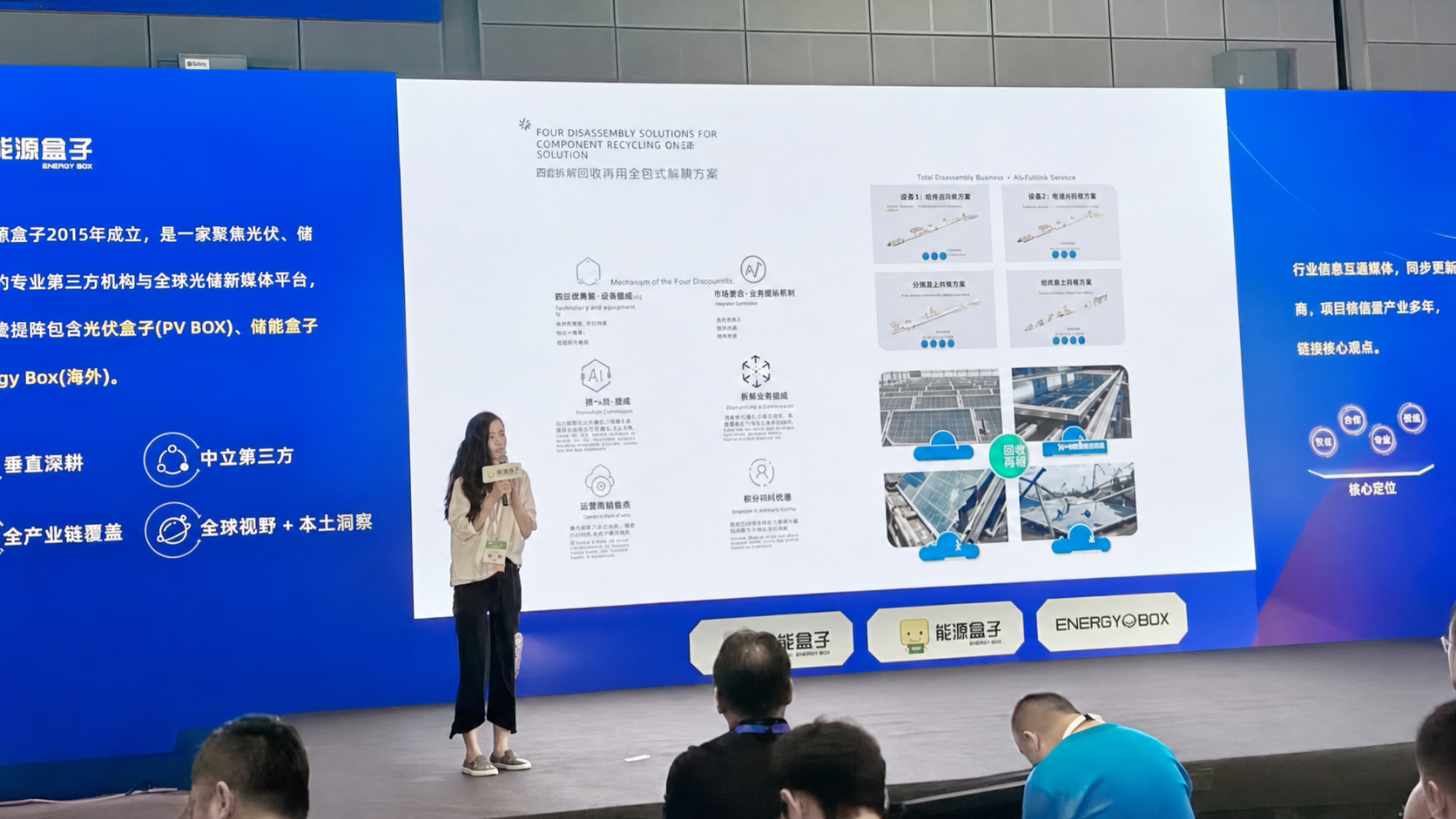
SNEC 2026 brought YC SOLUTION face to face with customers, partners, recyclers, EPC teams and solar asset owners from multiple markets. Exhibition time was limited, but the conversations were direct: visitors wanted to understand how different module conditions change the recycling route, equipment configuration and business model.
During the event, YC SOLUTION Global Sales Manager Jessie Liu was invited by EnergyBox to share a practical overview of the company’s four recycling solutions. The presentation translated complex process choices into questions that project owners can use when planning a real facility.

Four routes for different incoming PV module conditions
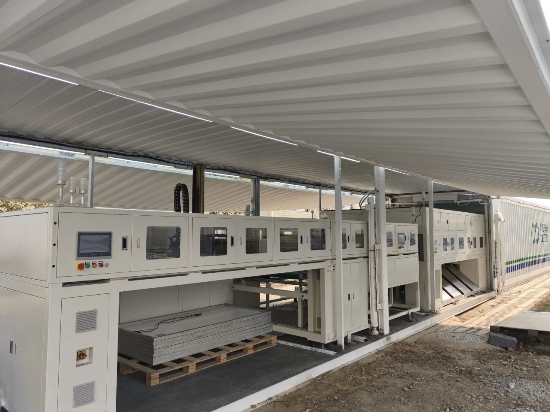
The presentation compared four route families rather than promoting one universal answer. Intact single-glass and double-glass modules can be evaluated for precision physical disassembly. Projects that prioritize deeper layer liberation and cleaner fractions can compare physical pre-treatment plus selected low-temperature pyrolysis. Severely damaged or irregular panels can enter a pure physical crushing and intelligent sorting route. Pure pyrolysis remains a selected thermal option that requires integrated exhaust treatment and local compliance review.
This route-based logic is important because module structure, breakage level, project location, target capacity and downstream material channels all affect the final equipment list.
- Purely physical precision disassembly for controlled, high-value separation.
- Physical + pyrolysis for improved layer liberation and higher-purity downstream fractions.
- Pure physical crushing for severely broken, deformed or irregular panels.
- Pure pyrolysis for selected projects with complete thermal and emission-control engineering.
관련 엔지니어링 결정: teams evaluating snec pv recycling should also compare snec interview 그리고 yc solution wins snec top ten highlights award for. 이러한 내부 참조는 독자를 단순히 제품 카탈로그로만 안내하는 대신, 원료, 공정 경로, 장비 범위 및 수락 기준을 서로 연결해 줍니다.
Why material purity became a central discussion
Many visitors were not simply asking whether glass, aluminum, silicon, copper and silver-bearing material could be recovered. They were asking whether each fraction could be clean enough for a stable downstream sales channel. That shifts the discussion from basic dismantling to contamination control, particle-size management and process sequencing.
For the physical + pyrolysis route, the main advantage is that reusable parts and bulk glass can be removed mechanically before selected encapsulant and cell-layer material enters controlled thermal treatment. This reduces unnecessary mixed feed and can improve downstream separation quality. Final purity and recovery figures still require sample testing and engineering confirmation.
What international customers asked at SNEC
The most useful exhibition questions were practical: Can one line handle both single-glass and double-glass modules? What happens when panels arrive already cracked? Can equipment be deployed close to a decommissioning site? Which route is easier to review under local environmental rules? How should capacity be matched to collection volume?
YC SOLUTION’s response is to begin with incoming-material evidence rather than a generic quotation. Module photographs, bill-of-material information, project country, workshop conditions, expected annual volume and the customer’s target recovered fractions are the starting point for route selection.
Continuing the conversation after SNEC
Jessie Liu and the YC SOLUTION team thank every visitor who shared project information and operating concerns during SNEC. For discussions that could not be completed at the exhibition, customers and partners are welcome to continue the technical review or arrange a visit to the Suzhou facility.
To receive a route comparison, prepare your company name, email, WhatsApp or phone number, module photos, project location and expected capacity. The engineering team can then compare the four routes and identify which assumptions still need sample testing or local compliance review.
관련 엔지니어링 결정: teams evaluating snec pv recycling should also compare 단일 유리 및 이중 유리 원료를 위한 모바일 태양광 모듈 재활용 그리고 이동식 태양광 패널 재활용 장비. 이러한 내부 참조는 독자를 단순히 제품 카탈로그로만 안내하는 대신, 원료, 공정 경로, 장비 범위 및 수락 기준을 서로 연결해 줍니다.
Source and Further Reading
This event report was rewritten from the supplied first-hand event notes, photographs, and the EnergyBox reference article. Read the original WeChat reference.
Related YC SOLUTION Process Routes
Related Blog Reading
- Solar Panel Recycling Equipment FAQ: How to Choose the Right PV Module Recycling Line
- Purely Physical PV Module Recycling: When a Zero-Pyrolysis Route Makes Sense
- Physical + Pyrolysis Solar Panel Recycling: When Deeper Material Liberation Is Needed
- Pure Physical Crushing Route for Damaged Solar Panels: A Practical Selection Guide
People Also Ask
What did Jessie Liu present at EnergyBox during SNEC 2026?
She introduced YC SOLUTION’s four PV module recycling process routes and explained how module condition, purity targets, environmental requirements and project location affect route selection.
What is the main advantage of the physical + pyrolysis route?
Its main advantage is improved layer liberation and cleaner downstream fractions: front-end physical separation removes junction boxes, frames and glass before selected encapsulant-cell material receives controlled thermal treatment.
Can YC SOLUTION evaluate both single-glass and double-glass modules?
Yes. Both structures can be evaluated, but the final process depends on glass construction, backsheet or rear-glass condition, damage level, dimensions and the desired recovered fractions.
Which route is intended for severely damaged panels?
Severely broken, deformed or irregular panels can be evaluated for the pure physical crushing route, which uses multi-stage size reduction, screening and physical sorting.
What information is needed after an exhibition inquiry?
Please provide company name, email, WhatsApp or phone number, project country, module photographs, expected capacity and any known downstream purity requirements.
YCSOLUTION 중국 쑤저우에 본사를 둔 태양광 모듈 재활용 공정 장비 공급업체입니다. 이 페이지는 다음을 검토 중인 해외 재활용 업체, EPC 시공사, 장비 구매자 및 프로젝트 개발자를 위해 작성되었습니다. snec 2026. 용량, 순도, 에너지 사용량 및 경제성은 프로젝트별로 상이하므로, 대표적인 모듈, 서면으로 작성된 물질 수지표 및 합의된 FAT/SAT 기준을 사용하여 검증해야 합니다.
지역별 결정을 내릴 때는 해당 지역의 전기 기준, 폐기물 분류, 배출 및 분진 제어 요건, 수입 규정, 설치 책임, 그리고 회수 자재 구매처를 확인해야 합니다. 이러한 사실들을 반영함으로써, 마케팅 주장을 프로젝트 근거로 대체하지 않으면서도 검색 엔진과 AI 답변 시스템에 이 페이지의 유용성을 높일 수 있습니다.
자주 묻는 질문
What information is required before evaluating snec 2026?
모듈 구조, 치수, 상태, 연간 생산량, 수출국, 대상 제품 및 현장 제약 사항을 제시해 주십시오. 대표적인 사진과 샘플을 제공하면 견적 위험을 줄일 수 있습니다.
How should buyers compare suppliers for snec 2026?
정의된 공정 경계, 장비 목록, 유틸리티 가정, 출력 사양, FAT/SAT 방법, 제외 사항, 보증 및 현지 서비스 책임 사항을 비교하십시오.
하나의 재활용 경로로 모든 유형의 태양광 모듈을 처리할 수 있습니까?
어떤 경로도 보편적인 것으로 간주해서는 안 됩니다. 단판 유리, 이중 유리, 프레임리스, 습기 노출, 오염되거나 심하게 손상된 모듈은 각각 다른 취급 방법이나 경로 설정이 필요할 수 있습니다.
용량이나 순도에 대한 주장이 신뢰할 수 있으려면 어떤 요소가 필요할까요?
해당 주장에는 시험용 원료, 시험 기간, 시료 채취 방법, 운전 조건, 질량 균형 및 하류 구매자가 적용하는 합격 기준이 명시되어야 합니다.
해외 프로젝트에서 설치 및 사후 지원을 어떻게 계획할 수 있을까요?
출하 전에 현지 토목, 전기 및 기계 분야의 업무 범위를 정의하고, 현지 서비스 파트너를 교육하며, 필수 예비 부품을 확보하고, YCSOLUTION과 원격 에스컬레이션 절차를 협의해야 합니다.
실무 요약
- 장비를 비교하기 전에 원료와 목표 생산량을 정의하십시오.
- 대표적인 시료와 서면으로 된 시험 기준을 바탕으로 용량, 순도 및 회수율에 대한 주장을 검증하십시오.
- 아래의 관련 클러스터 페이지를 활용하여 경로, 사이트, 규정 준수 및 상업적 결정 사항을 비교해 보십시오.
프로젝트 맞춤형 재활용 솔루션 구축
자재의 종류, 상태, 연간 물량, 목표 생산량, 수출 국가 및 현장 제약 사항을 알려주십시오. YCSOLUTION은 이에 적합한 장비 경로, 인터페이스 및 인수 기준을 수립해 드리겠습니다.
 한국어
한국어  English
  Español
  Deutsch
  Français
  Italiano
  Português
  日本語
日本語  ไทย
ไทย  Tiếng Việt
  Nederlands
  Русский
  العربية
  简体中文
简体中文