YCSOLUTION ENGINEERING INSIGHT
SNEC 2026: Jessie Liu, Global Sales Manager bij YC SOLUTION, is uitgenodigd om te spreken op EnergyBox
Kort antwoord: recycling van PV-panelen volgens de SNEC-norm
Op deze pagina wordt ingegaan op de koopintentie achter SNEC PV-recycling, YCSOLUTION, SNEC 2026, recycling van PV-modules, apparatuur voor de recycling van zonnepanelen, recyclingtechnologie, inzichten in de sector, innovatie van procesroutes, internationale PV-recycling, technische samenwerking. Deze termen worden gebruikt als technische begrippen – niet als een herhalende lijst met trefwoorden – zodat de pagina nuttig blijft voor Google, AI-antwoordengines en projectteams.
Ga verder met het beslissingspad via recyclingapparatuur voor zonnepanelen en recycling van fysieke zonnepanelen. Beide pagina’s gaan dieper in op dezelfde projectvraag, maar dan vanuit een andere technische of commerciële invalshoek.
Deze technische evaluatie richt zich op SNEC 2026. De voorwaarden zijn uitsluitend van toepassing wanneer ze aansluiten bij de grondstof, de omvang van de installatie, de economische aspecten van het project en de acceptatiecriteria die op deze pagina worden besproken.
Samenvatting van de beslissing
| Beslissingsgebied | Wat moet je vergelijken? | Te vragen bewijsmateriaal |
|---|---|---|
| Grondstof | Modulair ontwerp, staat, afmetingen en jaarlijks volume | Foto’s, gegevensbladen en representatieve monsters |
| Procesroute | Fysische, thermische, gecombineerde of breekmethode | Processtroom en vastgestelde grenzen voor de grondstoffen |
| Afdrukkwaliteit | Glas, aluminium, koper en fracties die cellen bevatten | Bemonsteringsmethode en specificatie voor goedkeuring na verwerking |
| Reikwijdte van de website | Nutsvoorzieningen, winning, civiele werken en installatie | Verantwoordelijkheidsmatrix en overzicht van voorzieningen |
| Aanvaarding | Doorvoer, bedrijfstijd, kwaliteit en veiligheid | Schriftelijk FAT/SAT-protocol |
Bedrijfsnieuws | SNEC 2026
Van intensieve internationale klantbijeenkomsten op de SNEC tot een presentatie over EnergyBox op uitnodiging: Jessie Liu lichtte de vier recyclingtrajecten voor PV-modules van YC SOLUTION toe, evenals de technische grondgedachte achter de keuze voor een bepaald traject.
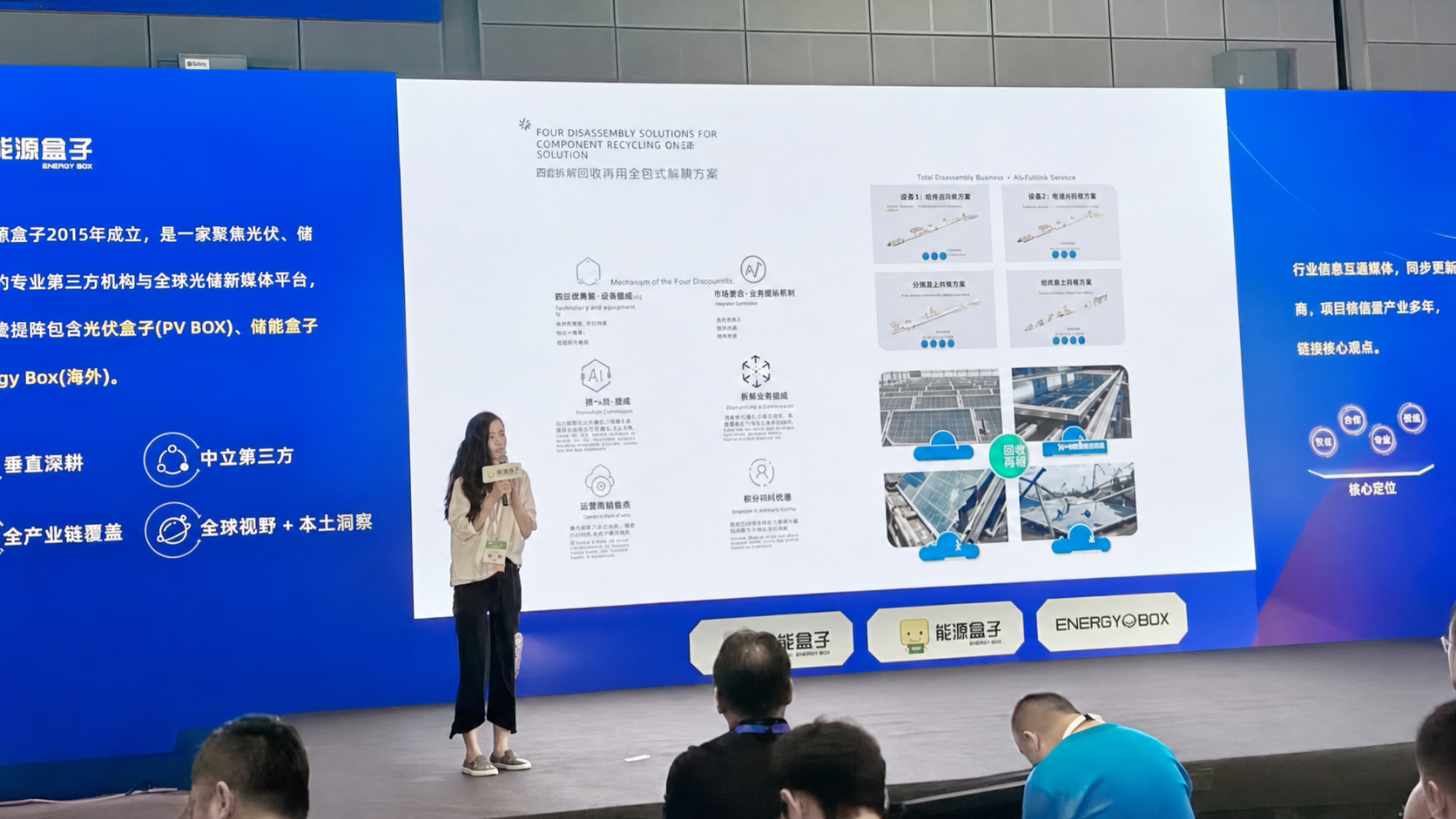
Van SNEC-klantbijeenkomsten tot het EnergyBox-podium
Tijdens SNEC 2026 kwam YC SOLUTION in direct contact met klanten, partners, recyclingbedrijven, EPC-teams en eigenaren van zonne-energie-installaties uit diverse markten. De beursduur was beperkt, maar de gesprekken waren openhartig: bezoekers wilden graag weten hoe de verschillende condities van de modules van invloed zijn op het recyclingtraject, de configuratie van de apparatuur en het bedrijfsmodel.
During the event, YC SOLUTION Global Sales Manager Jessie Liu was invited by EnergyBox to share a practical overview of the company’s four recycling solutions. The presentation translated complex process choices into questions that project owners can use when planning a real facility.

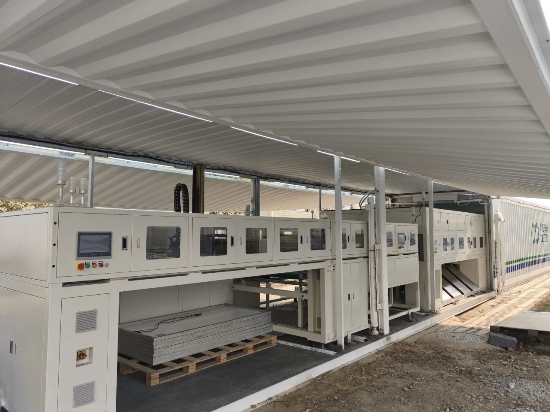
Vier procedures voor verschillende toestandscategorieën van binnenkomende PV-modules
In de presentatie werden vier categorieën van verwerkingsmethoden met elkaar vergeleken, in plaats van één universele oplossing aan te prijzen. Intacte modules met enkel of dubbel glas kunnen worden beoordeeld voor nauwkeurige fysieke demontage. Bij projecten waarbij het vrijmaken van diepere lagen en schonere fracties prioriteit hebben, kan fysieke voorbehandeling worden vergeleken met geselecteerde lage-temperatuurpyrolyse. Ernstig beschadigde of onregelmatige panelen kunnen worden verwerkt via een route met uitsluitend fysieke vermaling en intelligente sortering. Pure pyrolyse blijft een specifieke thermische optie die een geïntegreerde afgasbehandeling en lokale nalevingscontrole vereist.
Deze op de route gebaseerde logica is belangrijk omdat de modulestructuur, het breekniveau, de projectlocatie, de beoogde capaciteit en de stroomafwaartse materiaalkanalen allemaal van invloed zijn op de definitieve apparatuurlijst.
- Een puur fysieke, nauwkeurige demontage voor een gecontroleerde scheiding van hoogwaardige onderdelen.
- Fysische + pyrolyse voor een betere afscheiding van de lagen en zuiverdere fracties in de verdere verwerking.
- Puur mechanisch vermalen voor ernstig gebroken, vervormde of onregelmatige panelen.
- Zuivere pyrolyse voor geselecteerde projecten, inclusief het volledige thermische ontwerp en de emissiebeheersingstechniek.
Gerelateerde technische beslissing: Teams die de recycling van PV-panelen door SNEC evalueren, zouden ook een vergelijking moeten maken tussen snec-interview en yc solution wint de SNEC Top Ten Highlights Award voor. Deze interne verwijzingen leggen een verband tussen grondstoffen, procesroute, omvang van de apparatuur en acceptatiecriteria, in plaats van de lezer alleen naar een productcatalogus te verwijzen.
Waarom de zuiverheid van het materiaal een centraal discussiepunt werd
Veel bezoekers vroegen niet alleen of glas, aluminium, silicium, koper en zilverhoudend materiaal konden worden teruggewonnen. Ze vroegen zich af of elke fractie schoon genoeg zou zijn voor een stabiel afzetkanaal in de verdere verwerkingsketen. Daardoor verschuift de discussie van de basisontmanteling naar verontreinigingsbeheersing, de regeling van de deeltjesgrootte en de volgorde van de processen.
Het belangrijkste voordeel van de fysische + pyrolyseroute is dat herbruikbare onderdelen en bulkglas mechanisch kunnen worden verwijderd voordat het geselecteerde inkapselingsmateriaal en het materiaal van de cel-laag een gecontroleerde thermische behandeling ondergaan. Dit vermindert onnodige vermenging van het invoermateriaal en kan de kwaliteit van de verdere scheiding verbeteren. De uiteindelijke zuiverheids- en terugwinningspercentages moeten nog worden getest aan de hand van monsters en door ingenieurs worden bevestigd.
Wat internationale klanten op de SNEC vroegen
De meest nuttige vragen die tijdens de beurs werden gesteld, waren van praktische aard: Kan één productielijn zowel modules met enkel glas als met dubbel glas verwerken? Wat gebeurt er als panelen al beschadigd aankomen? Kan de apparatuur dicht bij een ontmantelingslocatie worden opgesteld? Welke route is gemakkelijker te beoordelen volgens de lokale milieuregels? Hoe moet de capaciteit worden afgestemd op het inzamelvolume?
YC SOLUTION’s response is to begin with incoming-material evidence rather than a generic quotation. Module photographs, bill-of-material information, project country, workshop conditions, expected annual volume and the customer’s target recovered fractions are the starting point for route selection.
Het gesprek voortzetten na SNEC
Jessie Liu en het YC SOLUTION-team bedanken alle bezoekers die tijdens SNEC informatie over projecten en operationele kwesties met hen hebben gedeeld. Voor gesprekken die tijdens de beurs niet konden worden afgerond, zijn klanten en partners van harte welkom om de technische besprekingen voort te zetten of een bezoek aan de vestiging in Suzhou te regelen.
Om een routevergelijking te ontvangen, dient u de naam van uw bedrijf, uw e-mailadres, WhatsApp-nummer of telefoonnummer, foto’s van de module, de projectlocatie en de verwachte capaciteit bij de hand te hebben. Het engineeringteam kan vervolgens de vier routes met elkaar vergelijken en vaststellen welke aannames nog moeten worden getoetst aan de hand van steekproeven of een lokale conformiteitsbeoordeling.
Gerelateerde technische beslissing: Teams die de recycling van PV-panelen door SNEC evalueren, zouden ook een vergelijking moeten maken tussen recycling van mobiele zonnepanelen voor grondstoffen met enkel glas en dubbel glas en recyclingapparatuur voor mobiele zonnepanelen. Deze interne verwijzingen leggen een verband tussen grondstoffen, procesroute, omvang van de apparatuur en acceptatiecriteria, in plaats van de lezer alleen naar een productcatalogus te verwijzen.
Bron en aanvullende literatuur
Dit verslag van het evenement is herschreven op basis van de aangeleverde aantekeningen uit de eerste hand, foto’s en het referentieartikel van EnergyBox. Lees de originele WeChat-referentie.
Gerelateerde YC SOLUTION-procesroutes
Aanbevolen blogartikelen
- Veelgestelde vragen over recyclingapparatuur voor zonnepanelen: Hoe kies je de juiste recyclinglijn voor PV-modules?
- Recycling van PV-modules zonder thermische bewerking: wanneer een methode zonder pyrolyse zinvol is
- Recycling van zonnepanelen via fysische en pyrolytische methoden: wanneer een grondigere materiaalafscheiding nodig is
- De methode van puur fysiek vermalen van beschadigde zonnepanelen: een praktische keuzegids
Veelgestelde vragen
Wat heeft Jessie Liu tijdens SNEC 2026 op EnergyBox gepresenteerd?
She introduced YC SOLUTION’s four PV module recycling process routes and explained how module condition, purity targets, environmental requirements and project location affect route selection.
Wat is het belangrijkste voordeel van de fysische + pyrolyse-methode?
Het belangrijkste voordeel is een betere loslating van de lagen en zuiverdere fracties in de verdere verwerkingsstappen: door middel van fysische scheiding in de beginfase worden aansluitdozen, frames en glas verwijderd, waarna het geselecteerde materiaal van de inkapseling en de zonnecellen een gecontroleerde thermische behandeling ondergaat.
Kan YC SOLUTION zowel modules met enkel glas als modules met dubbel glas beoordelen?
Ja. Beide constructies kunnen worden beoordeeld, maar het uiteindelijke proces hangt af van de glasopbouw, de toestand van de achterfolie of het achterglas, de omvang van de schade, de afmetingen en de gewenste teruggewonnen fracties.
Welke procedure is bedoeld voor ernstig beschadigde panelen?
Paneelstukken die ernstig gebroken, vervormd of onregelmatig zijn, kunnen worden beoordeeld voor de puur fysieke vermalingsmethode, waarbij gebruik wordt gemaakt van meerfasige verkleining, zeven en fysieke sortering.
Welke gegevens zijn nodig na een aanvraag voor een tentoonstelling?
Geef alstublieft de bedrijfsnaam, e-mailadres, WhatsApp-nummer of telefoonnummer, het land waar het project plaatsvindt, foto’s van de module, de verwachte capaciteit en eventuele bekende zuiverheidseisen voor de verdere verwerking op.
YCSOLUTIE is een leverancier van apparatuur voor het recyclen van fotovoltaïsche modules, gevestigd in Suzhou, China. Deze pagina is bedoeld voor internationale recyclers, EPC-aannemers, kopers van apparatuur en projectontwikkelaars die bezig zijn met het evalueren van SNEC 2026. Capaciteit, zuiverheid, energieverbruik en economische aspecten zijn projectspecifiek en moeten worden gecontroleerd aan de hand van representatieve modules, een schriftelijke massabalans en overeengekomen FAT/SAT-criteria.
Voor regio-specifieke beslissingen dient u de lokale elektrische normen, afvalclassificatie, voorschriften inzake emissies en stofbeheersing, invoervoorschriften, verantwoordelijkheden bij de installatie en afnemers van teruggewonnen materiaal te controleren. Deze feiten maken de pagina nuttiger voor zoekmachines en AI-antwoordsystemen, zonder dat marketingclaims in de plaats komen van projectgegevens.
Veelgestelde vragen
Welke informatie is nodig voordat SNEC 2026 kan worden beoordeeld?
Geef informatie over de opbouw van de module, de afmetingen, de staat waarin deze verkeert, het jaarlijkse volume, het land van bestemming, de beoogde producten en de beperkingen ter plaatse. Representatieve foto’s en monsters verminderen het risico bij het opstellen van een offerte.
Hoe kunnen kopers leveranciers vergelijken voor SNEC 2026?
Vergelijk de vastgestelde procesgrenzen, de apparatuurlijst, de aannames inzake nutsvoorzieningen, de outputspecificaties, de FAT/SAT-methode, de uitsluitingen, de garantie en de verantwoordelijkheid voor lokale service.
Kan één recyclingproces elk type fotovoltaïsche module verwerken?
Geen enkele route mag als universeel worden beschouwd. Modules met enkel glas, dubbel glas, zonder frame, natte, vervuilde en ernstig beschadigde modules kunnen een andere behandeling of andere route-instellingen vereisen.
Wat maakt een bewering over capaciteit of zuiverheid betrouwbaar?
In de verklaring moeten de geteste grondstof, de duur van de test, de bemonsteringsmethode, de bedrijfsomstandigheden, de massabalans en de door een afnemer in de verdere toeleveringsketen gehanteerde acceptatiespecificatie worden vermeld.
Hoe kan een project in het buitenland de installatie en de service na verkoop plannen?
Bepaal de lokale omvang van de civieltechnische, elektrotechnische en werktuigbouwkundige werkzaamheden; leid een lokale servicepartner op; zorg voor een voorraad essentiële reserveonderdelen; en spreek vóór verzending met YCSOLUTION een escalatieprocedure op afstand af.
Praktische samenvatting
- Bepaal eerst de grondstof en de beoogde output voordat u apparatuur met elkaar vergelijkt.
- Controleer de beweringen inzake capaciteit, zuiverheid en terugwinning aan de hand van representatief materiaal en schriftelijk vastgelegde testcriteria.
- Gebruik de onderstaande gerelateerde clusterpagina’s om beslissingen op het gebied van routes, locaties, naleving en commerciële aspecten met elkaar te vergelijken.
Ontwikkel een projectspecifieke recyclingoplossing
Geef het materiaaltype, de toestand, het jaarlijkse volume, de beoogde output, het land van bestemming en de beperkingen ter plaatse door. YCSOLUTION zal de geschikte route voor de apparatuur, de koppelingen en de acceptatiecriteria in kaart brengen.
Ontdek de complete oplossing · Bespreek het project met Jessie Liu
 Nederlands
  English
  Español
  Deutsch
  Français
  Italiano
  Português
  日本語
日本語  한국어
한국어  ไทย
ไทย  Tiếng Việt
  Русский
  العربية
  简体中文
简体中文