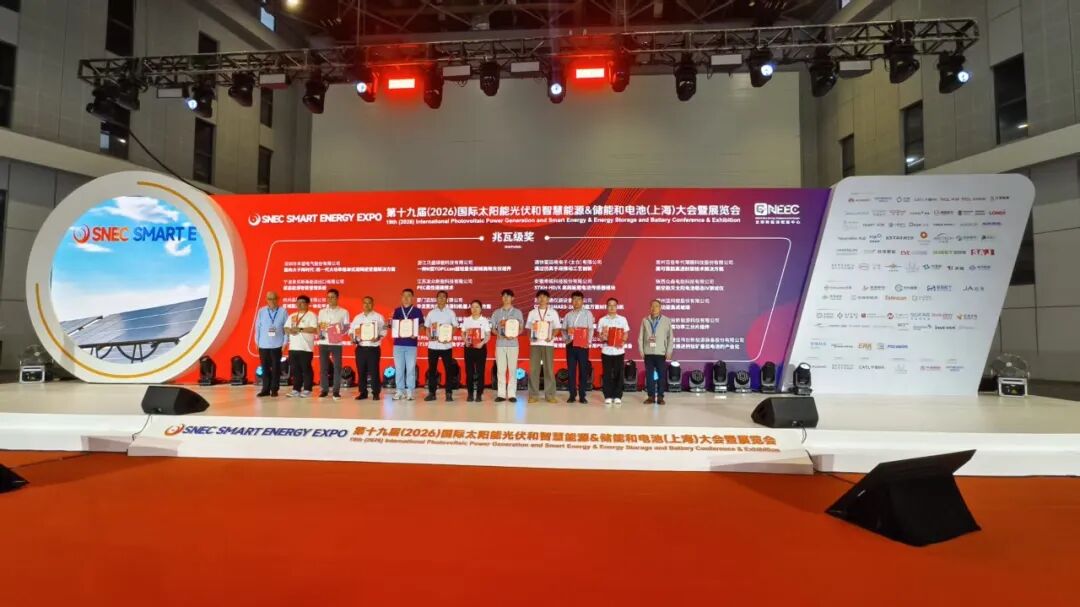
YC SOLUTION received a megawatt-level distinction in the SNEC 2026 Top Ten Highlights selection for its integrated PV module recycling solution and four-route process system. The recognition followed a technical presentation by R and D supervisor Zhang Zhongjian, who explained how the process portfolio addresses multiple module structures and project scenarios.
The award highlighted a shift in PV recycling innovation. The industry increasingly needs complete, deployable systems that connect module handling, material liberation, physical or thermal treatment, recovered-material quality, environmental control, and project economics.
Quick answer: yc solution wins snec top ten highlights award for
This page answers the buyer intent behind yc solution wins snec top ten highlights award for, YCSOLUTION, SNEC 2026, PV module recycling, solar panel recycling equipment, recycling technology, industry insights, process route innovation, international PV recycling, engineering collaboration. These phrases are used as engineering concepts—not as a repetitive keyword list—so the page remains useful to Google, AI answer engines and project teams.
Continue the decision path with solar panel recycling equipment and solar panel waste management. Both pages expand the same project question from a different technical or commercial angle.
The SNEC Top Ten Highlights program evaluates technologies and solutions presented during one of the solar industry's largest exhibitions. The selection considers originality, industry relevance, practical deployment value, and contribution to the wider energy transition.
For a PV recycling supplier, recognition in this setting is significant because the audience includes module manufacturers, project developers, power plant owners, equipment companies, research experts, and potential recycling operators. A successful solution must therefore communicate both technical depth and a credible path to implementation.
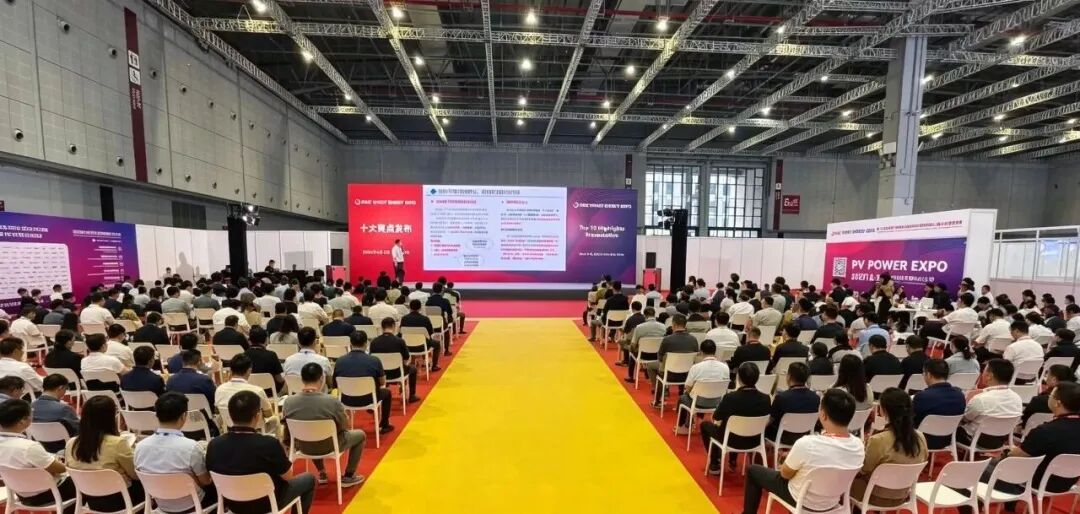
Industry experts and exhibition visitors attended the SNEC Top Ten Highlights technical presentations.
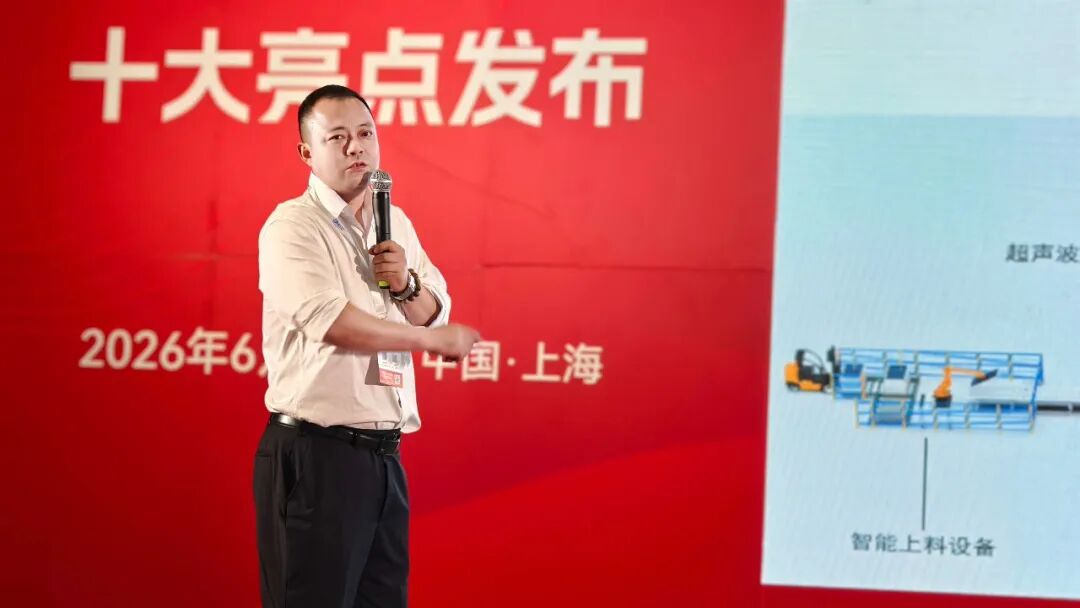
Zhang Zhongjian Presents the Integrated Recycling System
During the technical session, Zhang Zhongjian introduced YC SOLUTION's integrated approach to end-of-life PV modules. The presentation began with the diversity of today's waste streams: single-glass and double-glass modules, transport or storm damage, long-service-life degradation, manufacturing rejects, and special encapsulation structures.
He then explained why YC SOLUTION developed four process routes. The portfolio allows engineers to compare precision physical disassembly, physical pre-treatment with selected pyrolysis, physical crushing for badly damaged panels, and pure pyrolysis with downstream sorting. Each route responds to a different combination of feedstock condition, material target, environmental requirement, and project format.
Related engineering decision: teams evaluating yc solution wins snec top ten highlights award for should also compare double-glass solar panel recycling and snec pv recycling. These internal references connect feedstock, process route, equipment scope and acceptance criteria instead of sending readers only to a product catalogue.
The Innovation Is the Route-Selection Logic, Not a Single Machine
PV recycling projects can fail when a line is selected before the feedstock and output market are understood. YC SOLUTION's route-selection logic starts with the modules and the project. It then determines which equipment modules, separation depth, environmental systems, and automation level are justified.
For regular modules, precision physical dismantling can prioritize controlled removal. For selected high-purity objectives, physical plus pyrolysis can provide deeper liberation. For severely damaged modules, physical crushing offers a robust non-thermal path. For projects built around thermal treatment, pure pyrolysis integrates the furnace, gas management, cooling, and multi-stage sorting into one engineering review.
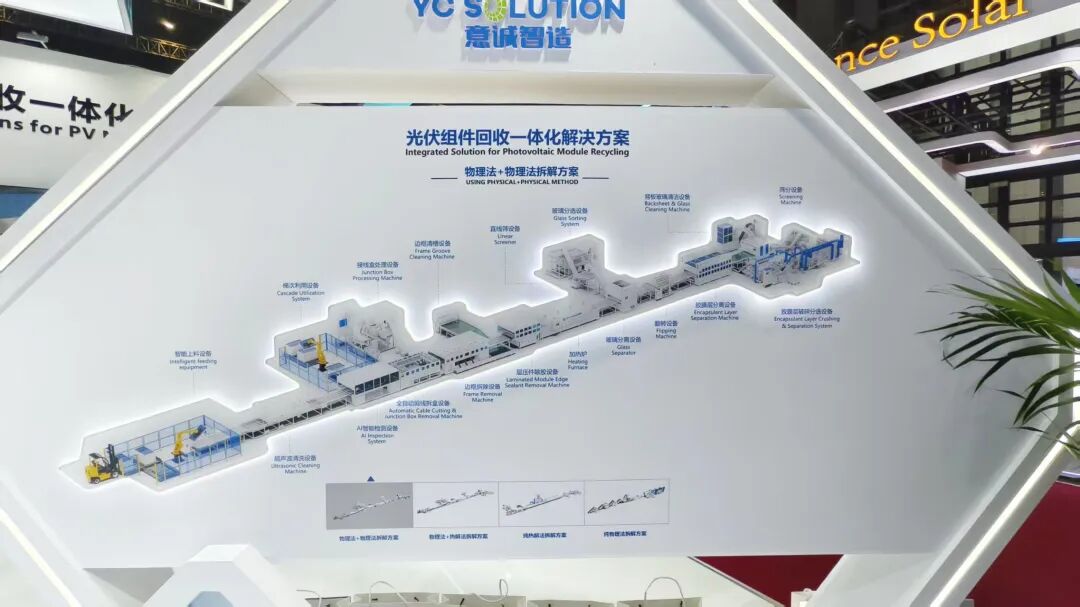
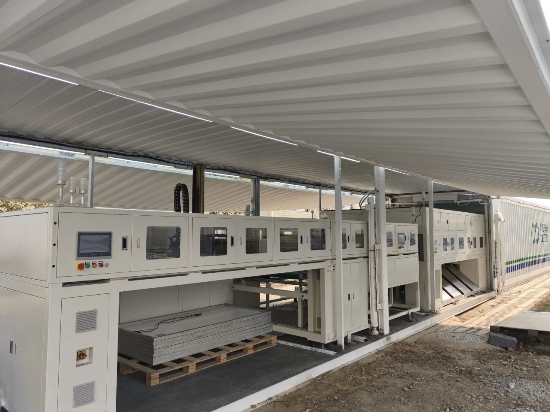
The integrated route display shows how equipment modules can be combined according to module and project conditions.
Industrial Value: Recovering Materials While Reducing Project Uncertainty
The objective of a recycling line is not only to dismantle panels. It is to create usable material fractions and a stable operating process. Aluminum, glass, copper, silicon-bearing material, polymers, and mixed residues all need suitable downstream routes.
A differentiated process portfolio can reduce project uncertainty by identifying the correct tests and equipment sequence earlier. It also helps customers compare investment, energy demand, automation, environmental systems, and expected product quality on a common basis.
Fixed, Modular, and Mobile Deployment Options
The integrated solution can be discussed for different operating models. A module manufacturer may require a line inside the factory for rejects and returned products. A power plant owner may need regional or on-site handling for decommissioning. A recycling operator may prioritize a fixed plant with multiple collection channels.
YC SOLUTION can compare fixed production lines, modular configurations, and selected containerized equipment. The final format depends on transportation distance, site utilities, workshop layout, local approval, capacity, and how recovered materials will be sold or reused.
From Technical Presentation to Award Recognition
Following the presentation and expert evaluation, YC SOLUTION's solution received the SNEC Top Ten Highlights megawatt-level distinction. The recognition reflected the combined value of the four-route system, technical development, project adaptability, and its contribution to a more circular PV industry.
The award is a milestone, but it is also a starting point. Future work will continue to focus on equipment intelligence, lower-energy processing, process stability, recovered-material quality, and localization for different countries and operating environments.
The SNEC 2026 Top Ten Highlights ceremony recognized technologies with strong innovation and deployment value.
Related engineering decision: teams evaluating yc solution wins snec top ten highlights award for should also compare snec interview and mobile pv recycling for remote solar farms and regional. These internal references connect feedstock, process route, equipment scope and acceptance criteria instead of sending readers only to a product catalogue.
How to Evaluate the Solution for a New Project
The first step is to provide company name, email, WhatsApp or phone, project country, module photos, estimated volume, and target materials. If available, customers can also share module samples, plant drawings, utility conditions, and local environmental requirements.
YC SOLUTION's sales and engineering teams can then compare the four routes, identify any required sample tests, and prepare a project-specific discussion. This approach is more useful than choosing equipment from a list before the process objective is clear.
It offers route selection across precision physical disassembly, physical plus pyrolysis, pure physical crushing, and pure pyrolysis instead of relying on one universal process.
Double-glass modules can be evaluated, but the recommended route depends on glass condition, laminate structure, damage level, capacity, and target outputs.
No. A project still requires feedstock review, sample testing where necessary, site engineering, environmental evaluation, and a confirmed equipment configuration.
Discuss Your PV Module Recycling Project
Compare the four process routes with YC SOLUTION sales and engineering. The first review is based on your module condition, site, capacity, and target outputs.
Explore the solar panel recycling solutions and compare the right process route for your feedstock, capacity, and output targets.
YCSOLUTION integrated PV module recycling route display — YCSOLUTION engineering reference.YCSOLUTION mobile PV recycling equipment — YCSOLUTION engineering reference.
Practical Summary
Define feedstock and target output before comparing equipment.
Verify capacity, purity and recovery claims with representative material and written test criteria.
Use the related cluster pages below to compare route, site, compliance and commercial decisions.
Build a Project-Specific Recycling Solution
Share the material type, condition, annual volume, target output, destination country and site constraints. YCSOLUTION will map the suitable equipment route, interfaces and acceptance criteria.

 English
  Español
  Deutsch
  Français
  Italiano
  Português
  日本語
日本語  한국어
한국어  ไทย
ไทย  Tiếng Việt
  Nederlands
  Русский
  العربية
  简体中文
简体中文