Built for damaged panels
Suitable for heavily broken, deformed, or mixed module streams that cannot easily enter precision dismantling equipment.
YCSOLUTION Process Route
A practical physical route for broken, deformed, or irregular PV modules that are not suitable for fine disassembly.
Core advantages
This route focuses on robust crushing, screening, and physical separation for severely damaged module streams where intact dismantling is difficult.
Suitable for heavily broken, deformed, or mixed module streams that cannot easily enter precision dismantling equipment.
Crushing, screening, air separation, and eddy-current separation can reduce process complexity for difficult incoming materials.
The route avoids thermal treatment and focuses on mechanical size reduction and physical sorting.
Separation stages can be selected according to incoming material condition and project target.
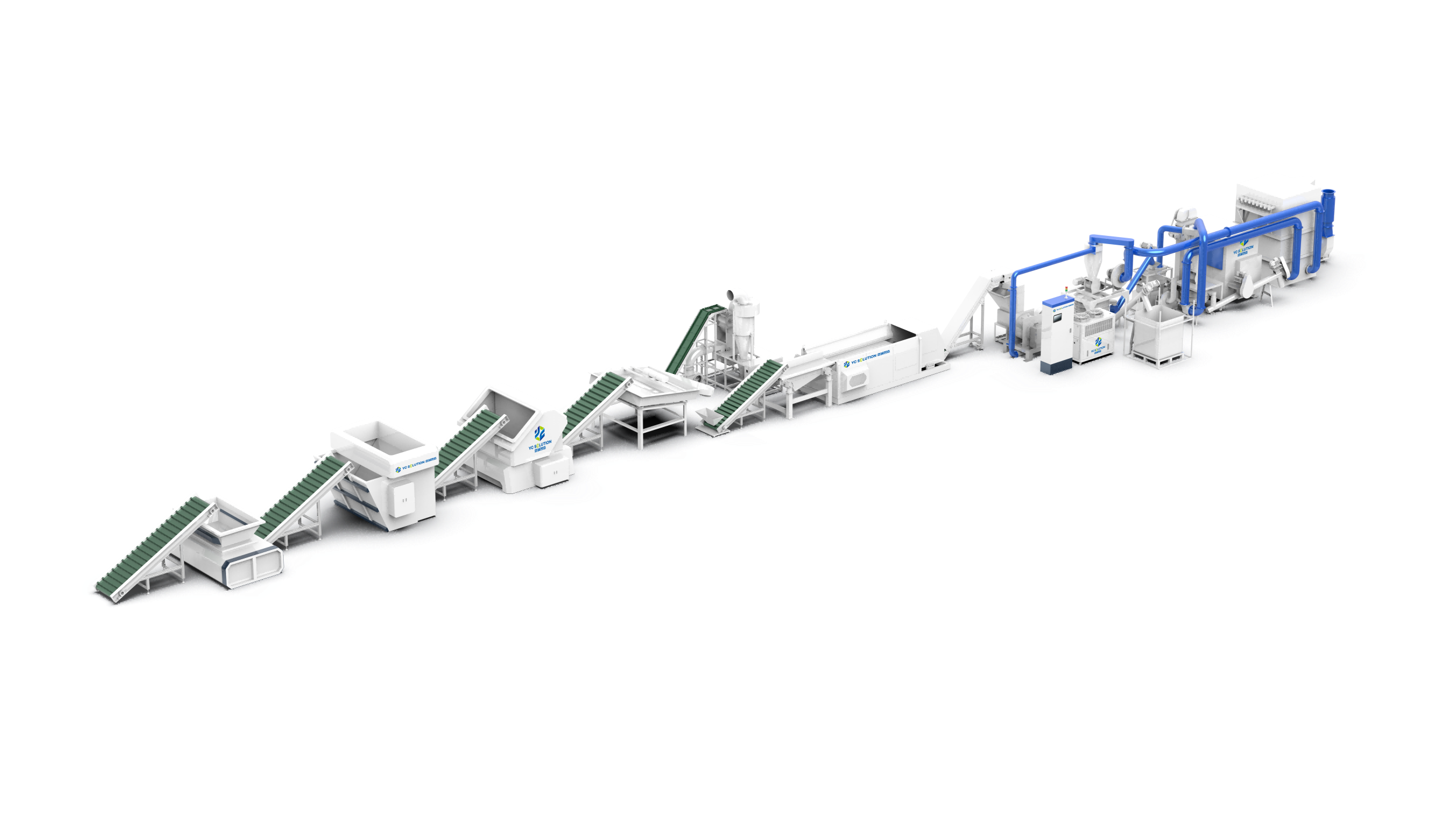
Complete line layout
Review the main equipment modules along the complete line, from front-end handling to downstream separation.
Process flow
The flow is designed for difficult module conditions where robust crushing and physical sorting are more suitable than precision dismantling.
Severely damaged single-glass or double-glass PV modules enter the physical treatment route.
Initial size reduction prepares mixed materials for controlled downstream crushing.
Further crushing adjusts particle size according to the selected separation plan.
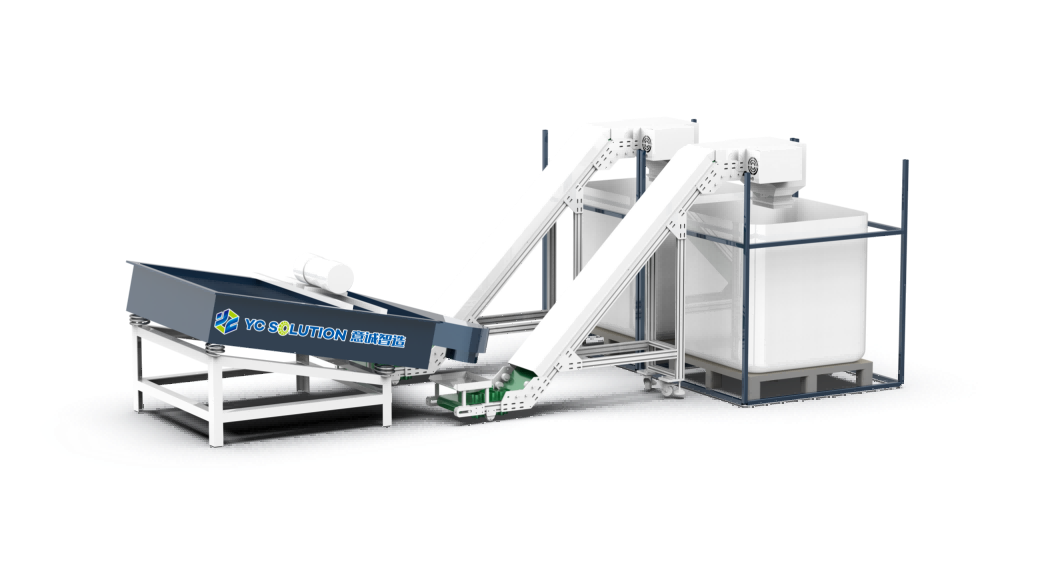
Screening classifies materials by particle size before separation.
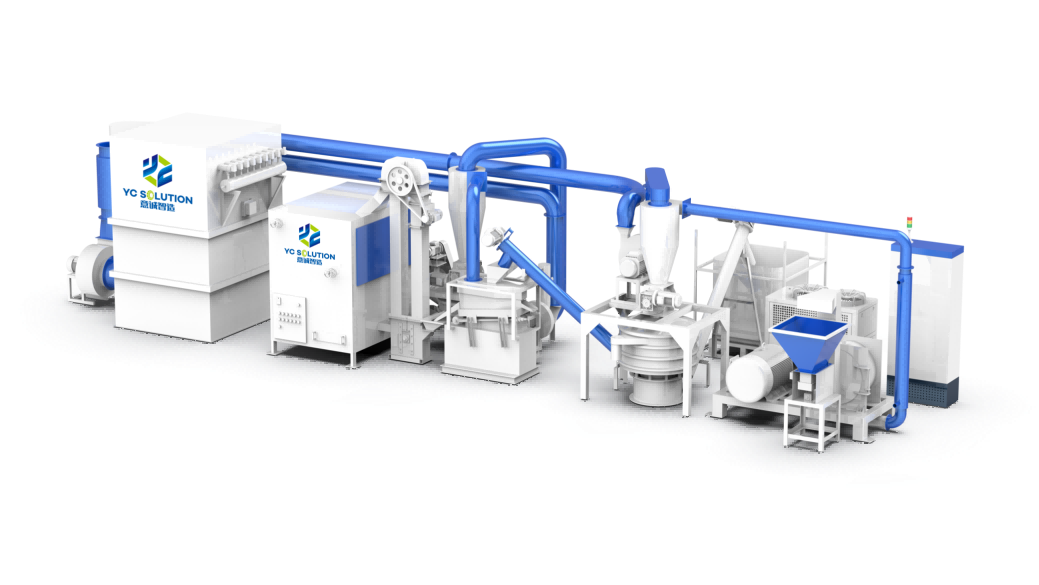
Air separation can be configured to separate lighter and heavier fractions.
Selected metal-related separation can be configured after screening.
Additional crushing and separation modules are selected according to material condition.
Final equipment combination is confirmed after checking samples, capacity, and site requirements.
Application fit
Best for projects where incoming panels are already broken, scattered, or unsuitable for precision frame/glass/backsheet dismantling.
Route proposal
Please leave your company name, email, and WhatsApp/phone number. Our engineer will review your module condition and recommend the suitable route configuration.


Required fields: Company Name, Email, and WhatsApp / Phone. Add module photos or capacity target in the message if available.
Project questions
The pure physical crushing route is aimed at broken, deformed, or irregular module streams. These answers explain why the route is different from precision disassembly and what project details are needed before equipment selection.


The pure physical crushing route is a mechanical recycling route for PV modules that are already badly broken, deformed, mixed, or unsuitable for precision dismantling. Instead of trying to keep large parts intact, it focuses on feeding, shredding, hammer crushing, screening, air separation, eddy-current separation, and selected downstream sorting.
This route is useful when the incoming material condition makes fine frame removal, glass separation, or backsheet protection difficult. It gives customers a practical process path for difficult waste streams, but the final separation quality still depends on module condition and the selected equipment configuration.
Precision physical disassembly is designed for better controlled removal of frame, junction box, glass, backsheet, and other structures when the module condition allows it. The crushing route is different: it accepts that the incoming panels may already be too damaged for intact dismantling and therefore prioritizes robust mechanical treatment.
For customers, this distinction is important. If panels are complete and regular, precision disassembly may create a better project route. If the panels are severely damaged after transport, storm damage, demolition, or long-term storage, crushing and physical sorting may be more realistic.
No. This route is designed as a physical process without a pyrolysis section. It relies on mechanical size reduction and physical separation modules, which may make it easier to discuss in projects where the customer wants to avoid thermal treatment.
However, avoiding pyrolysis does not mean the route is automatically simple. Dust collection, noise control, feeding safety, crusher configuration, screen size, and separation sequence still need proper engineering design based on site conditions and the customer's target capacity.
It is mainly suitable for severely broken, deformed, irregular, or mixed crystalline silicon PV modules. It can also be considered for customers whose incoming materials are too scattered or damaged to justify a fine dismantling route.
Before confirming the process, we should ask for module photos, approximate damage ratio, module type, packaging condition, and whether the materials are mixed with soil, cables, metal parts, or other impurities. These details affect the feeding design and downstream separation plan.
Double-glass modules can be evaluated, especially when they are already broken and cannot be handled well by a precision route. The key question is not only whether the line can crush the material, but what particle size, separation target, and downstream handling the customer expects.
For double-glass crushing projects, the engineer should review glass condition, breakage level, expected throughput, dust-control requirements, and target material channels. The final route may require different crusher and screening settings from single-glass materials.
Yes, single-glass modules can be evaluated, especially when they are already broken or unsuitable for fine dismantling.
It may simplify the process for damaged modules, but total cost depends on capacity, automation, site layout, and separation requirements.
No fixed purity should be promised before testing or engineering review. Results depend on incoming module condition and line configuration.
Capacity depends on module condition, particle-size target, crusher configuration, and downstream separation stages.
Cleaning or pre-sorting can be discussed if incoming modules contain dust, soil, or mixed impurities.
Yes. Crusher type, screen size, separation stages, feeding method, and dust-control planning can be configured.
A mobile or compact design can be discussed, but feasibility depends on capacity, equipment selection, and site operation conditions.
Please provide company name, email, WhatsApp/phone, module photos, damage level, approximate volume, and project location.
Complete panels can be processed, but if the panels are intact, precision disassembly may be a better route to compare.
Our engineer will compare module condition, environmental requirements, expected capacity, and project target before recommending a route.
新着記事の通知を受け取る
下記のフォームにご記入ください。