YCSOLUTION PROCESS ROUTE

Pure Physical Crushing Route for Severely Damaged PV Modules

A practical no-pyrolysis route for severely damaged modules: robust crushing, graded screening and physical sorting turn unstable broken panels into separable material streams.

Vantaggi principali

Perché scegliere questo itinerario

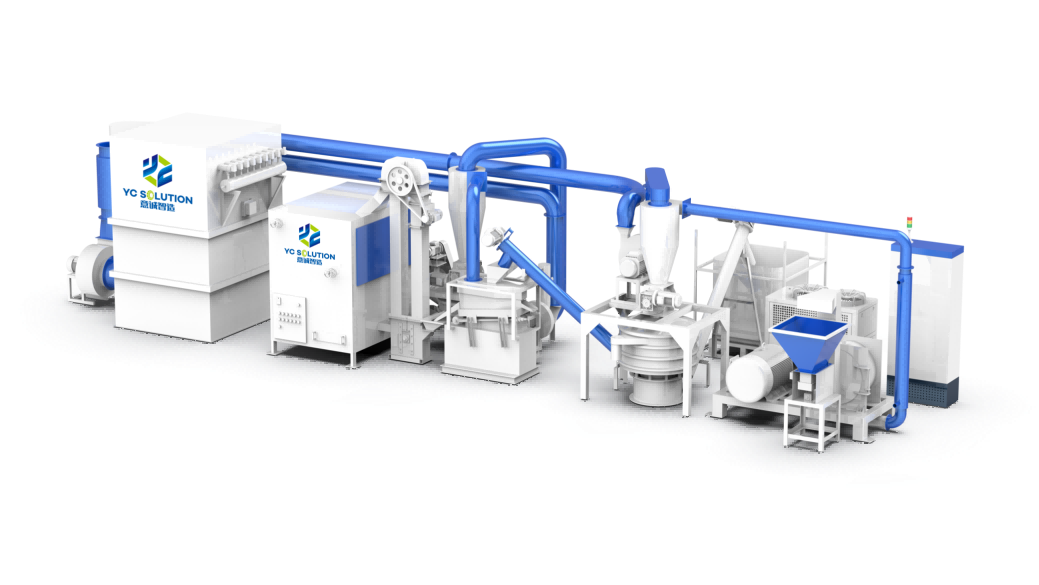
This route is the stronger choice when incoming PV modules are already bent, cracked, shattered or structurally unstable, making precision disassembly inefficient. Instead of trying to keep frames or glass intact, it uses double-shaft shredding, hammer crushing, linear screening, airflow separation and eddy-current separation to make difficult feedstock sortable without pyrolysis or chemical treatment.

Best fit for damaged-module feedstock

It is designed for bent, shattered, irregular or mixed single-glass and double-glass panels that cannot be handled efficiently by precision frame and glass removal.

No need to preserve intact frames or glass

The process accepts that the incoming modules are already unstable, then uses shredding, hammer crushing and screening to create a controlled particle-size distribution.

Physical sorting without pyrolysis

Airflow separation, eddy-current separation and crushing/sorting modules recover usable fractions without thermal decomposition or chemical reagents.

More practical for overseas damaged-panel projects

Because the route avoids pyrolysis, customer discussions can focus on feeding safety, dust collection, noise control, output quality and site layout.

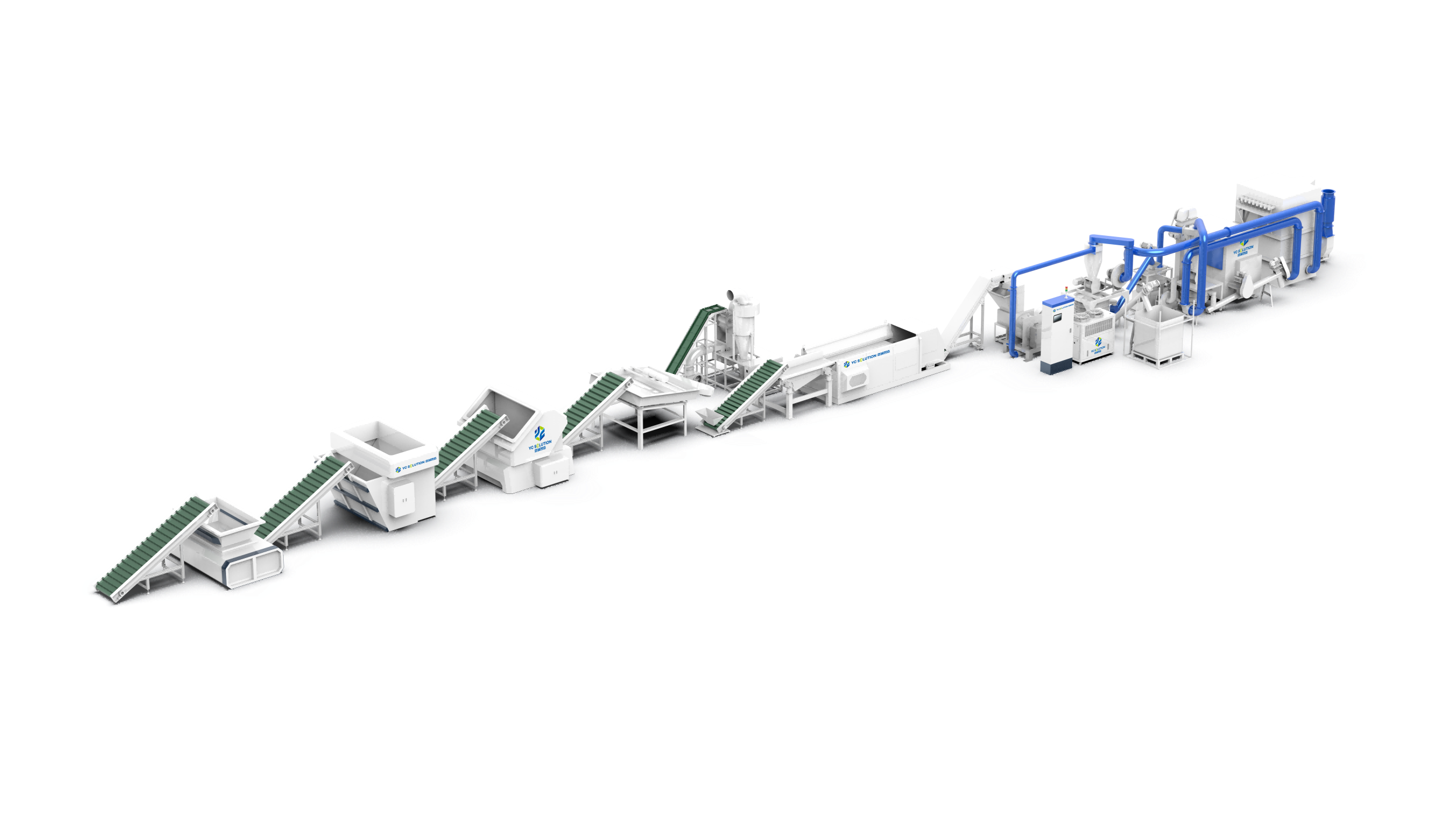
Disposizione completa della linea

Sequenza delle attrezzature lungo l'intero percorso

Pure physical crushing route for severely damaged PV modules
1. Double-Shaft Shredder

1. Double-Shaft Shredder

2. Primary Hammer Crusher

2. Primary Hammer Crusher

3. Secondary Hammer Crusher

3. Secondary Hammer Crusher

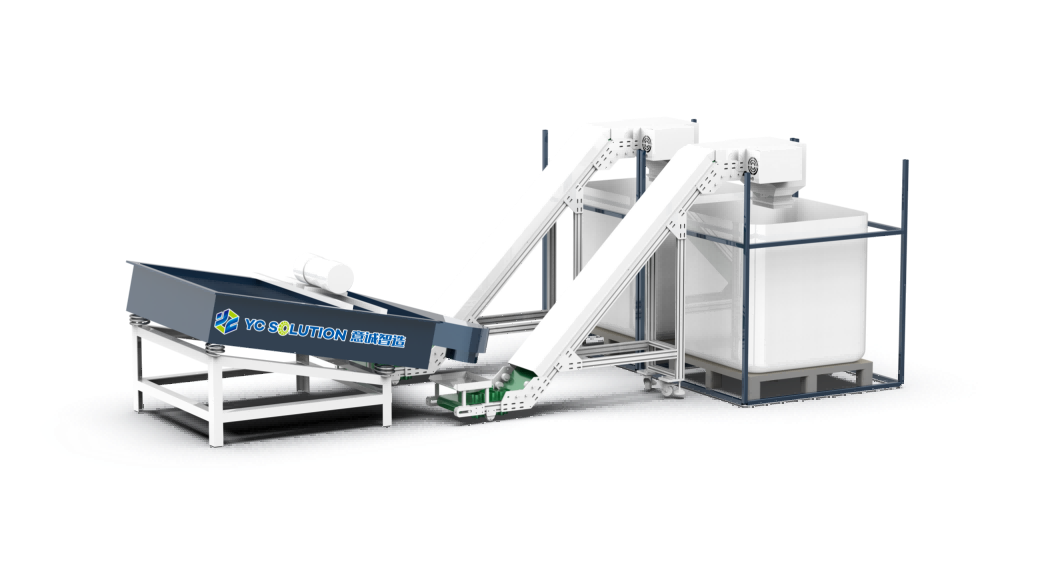
4. Linear Screener

4. Linear Screener

5. Airflow Separator

5. Airflow Separator

6. Eddy Current Separator

6. Eddy Current Separator

7. Crushing and Sorting Equipment

7. Crushing and Sorting Equipment

Flusso di processo

Physical Crushing and Sorting Process

This flow is designed for difficult module conditions where robust crushing and physical sorting are more suitable than precision dismantling.

01

Damaged module feeding

Severely damaged single-glass or double-glass PV modules enter the mechanical treatment route after feedstock review.

02

Double-shaft shredding

The double-shaft shredder opens the broken or deformed modules and prepares them for controlled crushing.

03

Primary and secondary hammer crushing

Primary and secondary hammer crushers reduce particle size according to the selected separation plan.

04

Linear screening

The linear screener classifies material by particle size before downstream sorting.

05

Airflow separation

The airflow separator separates light and heavy fractions according to density and aerodynamic behavior.

06

Eddy-current separation

The eddy current separator recovers suitable non-ferrous metal fractions after screening.

07

Crushing and sorting

The crushing and sorting equipment upgrades remaining mixed fractions into glass particles, glass powder, aluminum, copper, plastic, silicon and related outputs.

08

Project review

Final equipment combination is confirmed after checking samples, capacity, dust-control requirements and site conditions.

Adattabilità dell'applicazione

Scenari di progetto idonei

  • Severely damaged PV module recycling projects.
  • Mixed broken panel streams from solar farms, storms, transport damage, or demolition.
  • Customers needing a simpler physical process without a pyrolysis section.
  • Projects where fine dismantling is not economical due to incoming material condition.
  • Pre-treatment bases that need robust crushing and physical sorting before downstream handling.

Proposta di itinerario

Richiedi la revisione del tuo percorso di studi in ingegneria

Ti preghiamo di indicare il nome della tua azienda, l'indirizzo e-mail e il numero di telefono o WhatsApp. Il nostro tecnico valuterà le condizioni del tuo modulo e ti consiglierà la configurazione più adatta.

  • Suitable for severely broken or irregular PV modules.
  • Uses mechanical crushing, screening, and physical sorting without pyrolysis.
  • Module photos and damage level are important before choosing equipment.
Pure physical crushing route for severely damaged PV modules

FAQ

Domande sul progetto

Domande frequenti

The pure physical crushing route is aimed at broken, deformed, or irregular module streams. These answers explain why the route is different from precision disassembly and what project details are needed before equipment selection.

Pure physical crushing route for severely damaged PV modules

The pure physical crushing route is a mechanical recycling route for PV modules that are already badly broken, deformed, mixed, or unsuitable for precision dismantling. Instead of trying to keep large parts intact, it focuses on double-shaft shredding, primary and secondary hammer crushing, linear screening, airflow separation, eddy-current separation, and crushing/sorting equipment.

This route is useful when the incoming material condition makes fine frame removal, glass separation, or backsheet protection difficult. It gives customers a practical process path for difficult waste streams, but the final separation quality still depends on module condition and the selected equipment configuration.
Precision physical disassembly is designed for better controlled removal of frame, junction box, glass, backsheet, and other structures when the module condition allows it. The crushing route is different: it accepts that the incoming panels may already be too damaged for intact dismantling and therefore prioritizes robust mechanical treatment.

For customers, this distinction is important. If panels are complete and regular, precision disassembly may create a better project route. If the panels are severely damaged after transport, storm damage, demolition, or long-term storage, crushing and physical sorting may be more realistic.

No. This route is designed as a physical process without a pyrolysis section. It relies on mechanical size reduction and physical separation modules, which may make it easier to discuss in projects where the customer wants to avoid thermal treatment.

However, avoiding pyrolysis does not mean the route is automatically simple. Dust collection, noise control, feeding safety, crusher configuration, screen size, and separation sequence still need proper engineering design based on site conditions and the customer’s target capacity.

It is mainly suitable for severely broken, deformed, irregular, or mixed crystalline silicon PV modules. It can also be considered for customers whose incoming materials are too scattered or damaged to justify a fine dismantling route.

Before confirming the process, we should ask for module photos, approximate damage ratio, module type, packaging condition, and whether the materials are mixed with soil, cables, metal parts, or other impurities. These details affect the feeding design and downstream separation plan.

Double-glass modules can be evaluated, especially when they are already broken and cannot be handled well by a precision route. The key question is not only whether the line can crush the material, but what particle size, separation target, and downstream handling the customer expects.

For double-glass crushing projects, the engineer should review glass condition, breakage level, expected throughput, dust-control requirements, and target material channels. The final route may require different crusher and screening settings from single-glass materials.

Yes, single-glass modules can be evaluated, especially when they are already broken or unsuitable for fine dismantling.

It may simplify the process for damaged modules, but total cost depends on capacity, automation, site layout, and separation requirements.

No fixed purity should be promised before testing or engineering review. Results depend on incoming module condition and line configuration.

Capacity depends on module condition, particle-size target, crusher configuration, and downstream separation stages.

Cleaning or pre-sorting can be discussed if incoming modules contain dust, soil, or mixed impurities.

Yes. Crusher type, screen size, separation stages, feeding method, and dust-control planning can be configured.

A mobile or compact design can be discussed, but feasibility depends on capacity, equipment selection, and site operation conditions.

Please provide company name, email, WhatsApp/phone, module photos, damage level, approximate volume, and project location.

Complete panels can be processed, but if the panels are intact, precision disassembly may be a better route to compare.

Our engineer will compare module condition, environmental requirements, expected capacity, and project target before recommending a route.

Product Information · Pillar–Cluster Guide

Quick answer: pure physical crushing route for damaged solar panels

This page answers the buyer intent behind pure physical crushing route for damaged solar panels, solar panel recycling machine, automated recycling equipment, PV module processing line, glass separation equipment, frame removal machine, junction box removal, screening equipment, airflow separator, crushing and sorting equipment. These phrases are used as engineering concepts—not as a repetitive keyword list—so the page remains useful to Google, AI answer engines and project teams.

Continue the decision path with solar panel recycling equipment e damaged solar panel recycling. Both pages expand the same project question from a different technical or commercial angle.

pure physical crushing route for damaged solar panels - Crushing and sorting equipment for controlled material separation
Crushing and sorting equipment for controlled material separation — YCSOLUTION engineering reference.
pure physical crushing route for damaged solar panels - Screening equipment for stable particle-size classification
Screening equipment for stable particle-size classification — YCSOLUTION engineering reference.

Practical Summary

  • Define feedstock and target output before comparing equipment.
  • Verify capacity, purity and recovery claims with representative material and written test criteria.
  • Use the related cluster pages below to compare route, site, compliance and commercial decisions.

Build a Project-Specific Recycling Solution

Share the material type, condition, annual volume, target output, destination country and site constraints. YCSOLUTION will map the suitable equipment route, interfaces and acceptance criteria.

Explore the complete solution · Discuss the project with Jessie Liu

it_ITItaliano
Ricevere le ultime notizie

Iscriviti alla nostra newsletter settimanale

Ricevere una notifica sui nuovi articoli

Ottenere un preventivo migliore

Compilate il modulo sottostante e vi contatteremo al più presto.

Informazioni di contatto
Informazioni sul prodotto
messaggio