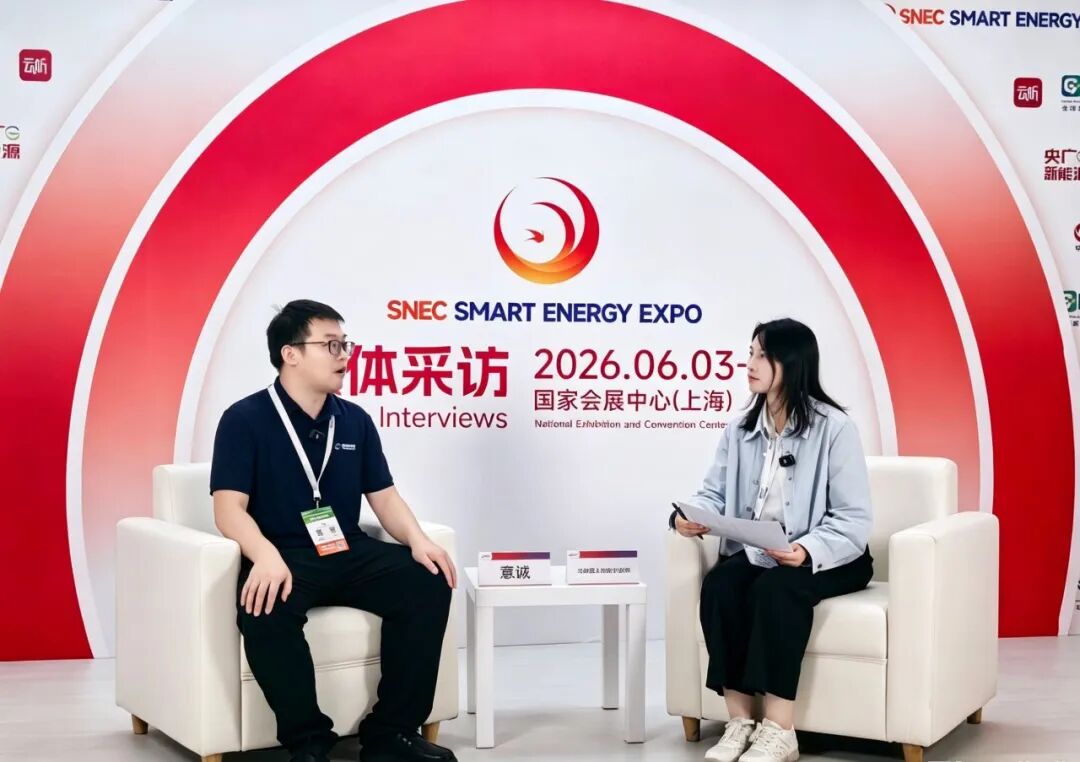
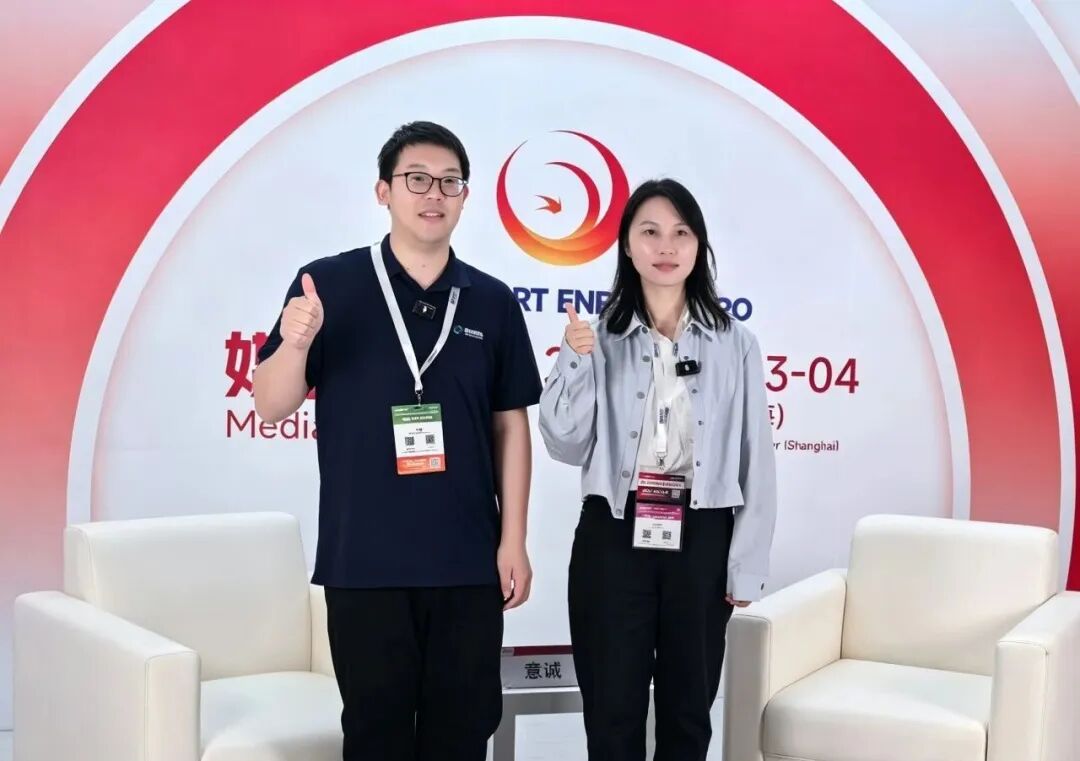
PV module recycling became a major topic at SNEC 2026 as manufacturers and asset owners looked beyond installation growth toward the full life cycle of solar equipment. During the exhibition, YC SOLUTION Technical Director Zhang Xin joined an industry media interview to explain how four differentiated process routes can address the limits of one-size-fits-all recycling.
The interview connected equipment design with practical deployment. It covered the coexistence of single-glass, double-glass, damaged, and specially encapsulated modules, as well as the need to balance material liberation, energy use, environmental control, investment, and downstream market requirements.
Why One Recycling Route Cannot Fit Every PV Waste Stream
Company News · Pillar–Cluster Guide
Quick answer: snec interview
This page answers the buyer intent behind snec interview, YCSOLUTION, SNEC 2026, Переработка фотоэлектрических модулей, оборудование для переработки солнечных панелей, технологии переработки отходов, industry insights, process route innovation, international PV recycling, engineering collaboration. These phrases are used as engineering concepts—not as a repetitive keyword list—so the page remains useful to Google, AI answer engines and project teams.
Продолжить маршрут принятия решения с помощью оборудование для переработки солнечных панелей и утилизация отходов солнечных панелей. На обеих страницах рассматривается один и тот же вопрос, связанный с проектом, с разных технических или коммерческих точек зрения.
The installed solar base contains many generations of module design. Older single-glass modules, newer double-glass modules, storm-damaged panels, transport breakage, manufacturing rejects, and mixed decommissioning streams create very different handling conditions.
Zhang Xin explained that the process should be selected around the feedstock and project target. A line designed to preserve large glass fractions from regular modules is not automatically the best choice for a stream dominated by heavily broken panels. Similarly, a route involving thermal treatment must be evaluated differently from a physical-only process because exhaust, safety, and permitting become central engineering topics.
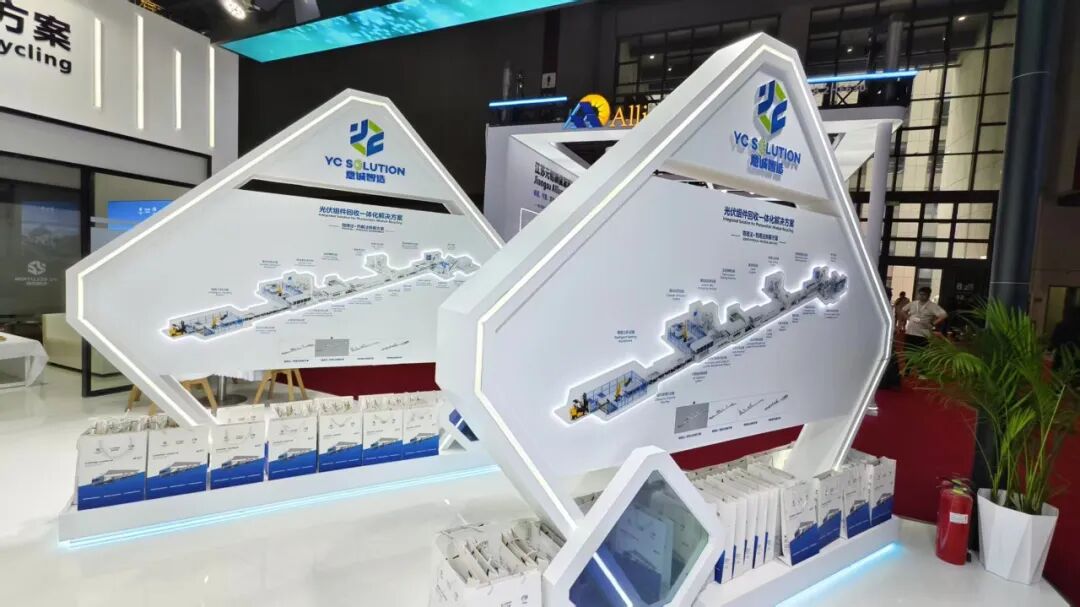
The YC SOLUTION booth used route displays to compare different process paths for real PV waste streams.
Route 1: Purely Physical Precision Disassembly
Соответствующее инженерное решение: teams evaluating snec interview should also compare переработка солнечных панелей с двойным остеклением и snec pv recycling. Эти внутренние ссылки связывают исходное сырье, технологический маршрут, перечень оборудования и критерии приемки, а не просто отсылают читателей к каталогу продукции.
The purely physical precision route is intended for intact or comparatively regular modules where controlled removal can preserve more material value. Depending on the project, the process can include automated loading, cleaning, AI-assisted inspection, junction box removal, frame dismantling, glass separation, layer treatment, screening, and physical sorting.
This route avoids making pyrolysis the core process. It is therefore an important option for customers prioritizing physical treatment, controlled component removal, and a project path that can be discussed without a thermal section.
Route 2: Physical Pre-treatment Plus Selected Pyrolysis
The physical plus pyrolysis route uses mechanical preparation before selected controlled thermal treatment. Its central commercial value is deeper layer liberation and the potential to improve the purity of downstream fractions when physical separation alone cannot meet the project objective.
Because the route connects mechanical equipment, a thermal section, exhaust treatment, cooling, and sorting, the full configuration must be reviewed as one system. Project country, environmental requirements, capacity, safety planning, and recovered-material targets all influence feasibility.
Route 3: Pure Physical Crushing for Severely Damaged Panels
When modules are already shattered, deformed, irregular, or mixed, precision dismantling may no longer be economical. The pure physical crushing route is designed for these difficult feedstocks. It uses robust feeding, shredding, staged crushing, screening, air separation, eddy-current separation, and additional physical sorting according to the target fractions.
The route remains physical, but it still requires careful dust collection, noise control, particle-size management, and separation design. Module photos and damage ratios are especially important before equipment selection.
Route 4: Pure Pyrolysis with Integrated Downstream Sorting
Pure pyrolysis places controlled thermal treatment at the center of the process. A complete system can include junction box processing, frame groove and sealant cleaning, a regenerative tunnel pyrolysis section, gas and exhaust management, cooling, discharge, and multi-stage sorting.
This route is not a universal recommendation. It is suitable only after the project team evaluates local environmental conditions, thermal safety, utilities, exhaust treatment, incoming material, and the intended downstream products.
From Equipment Modules to an Integrated Recycling Project
The interview also emphasized that equipment is only one layer of a recycling project. Customers need collection and logistics assumptions, plant layout, utilities, environmental systems, operator training, maintenance planning, and channels for recovered material.
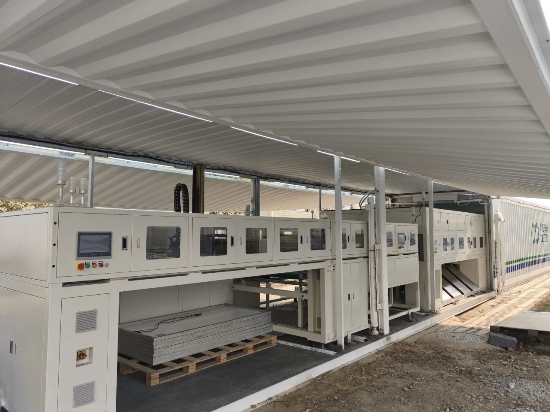
YC SOLUTION can compare fixed production lines with modular or containerized configurations according to the project. Manufacturers may need an in-factory line for production rejects, power plant owners may prioritize regional or on-site processing, and independent recyclers may need a scalable line connected to multiple feedstock sources.
The SNEC interview translated technical route differences into questions that customers can use during project planning.
Соответствующее инженерное решение: teams evaluating snec interview should also compare yc solution wins snec top ten highlights award for и mobile pv recycling for remote solar farms and regional. Эти внутренние ссылки связывают исходное сырье, технологический маршрут, перечень оборудования и критерии приемки, а не просто отсылают читателей к каталогу продукции.
The Information Buyers Should Prepare Before Route Selection
A useful engineering review starts with module type, dimensions, single- or double-glass structure, damage condition, expected annual or hourly volume, installation country, workshop or site constraints, and target output fractions.
Customers should also explain whether the project is for manufacturing waste, decommissioned power plant modules, regional collection, or mixed third-party feedstock. These details help determine which route deserves sample testing and which equipment modules should appear in a proposal.
They use different combinations of precision dismantling, crushing, thermal treatment, and physical sorting according to feedstock and project targets.
Physical plus pyrolysis may be evaluated when deeper liberation and improved downstream purity are important, subject to environmental and site review.
Send company and contact details, module photos, module structure, damage condition, expected capacity, project country, and target outputs.
Discuss Your PV Module Recycling Project
Compare the four process routes with YC SOLUTION sales and engineering. The first review is based on your module condition, site, capacity, and target outputs.
Explore the solar panel recycling solutions and compare the right process route for your feedstock, capacity, and output targets.
YCSOLUTION integrated PV module recycling route display — YCSOLUTION engineering reference.YCSOLUTION mobile PV recycling equipment — YCSOLUTION engineering reference.
Практическое резюме
Прежде чем сравнивать оборудование, определите исходное сырье и целевой объем производства.
Проверьте заявленные показатели производительности, чистоты и коэффициента извлечения с помощью репрезентативного материала и письменных критериев испытаний.
Воспользуйтесь приведенными ниже страницами, посвящёнными соответствующим кластерам, чтобы сравнить решения, касающиеся маршрутов, объектов, соблюдения нормативных требований и коммерческих аспектов.
Разработка индивидуального решения по переработке отходов для конкретного проекта
Укажите тип материала, его состояние, годовой объём, плановый объём производства, страну назначения и ограничения, связанные с площадкой. Компания YCSOLUTION разработает оптимальный маршрут доставки оборудования, определит интерфейсы и критерии приёмки.

 Русский
  English
  Español
  Deutsch
  Français
  Italiano
  Português
  日本語
日本語  한국어
한국어  ไทย
ไทย  Tiếng Việt
  Nederlands
  العربية
  简体中文
简体中文