Thermal route for selected projects
This route is considered when thermal treatment is required by the project condition and approved by engineering review.
YCSOLUTION Process Route
A thermal process route for selected PV module recycling projects, requiring careful review of module type, exhaust treatment, and local regulations.
Core advantages
Pure pyrolysis should be selected only after engineering review. It is not a universal route, but it can be discussed for special project conditions requiring thermal treatment.
This route is considered when thermal treatment is required by the project condition and approved by engineering review.
Module type, environmental rules, exhaust treatment, and final line configuration must be checked before quotation.
Pyrolysis projects should include exhaust and emissions treatment planning as part of the full system discussion.
After thermal treatment, downstream crushing, screening, and separation modules can be configured according to project goals.
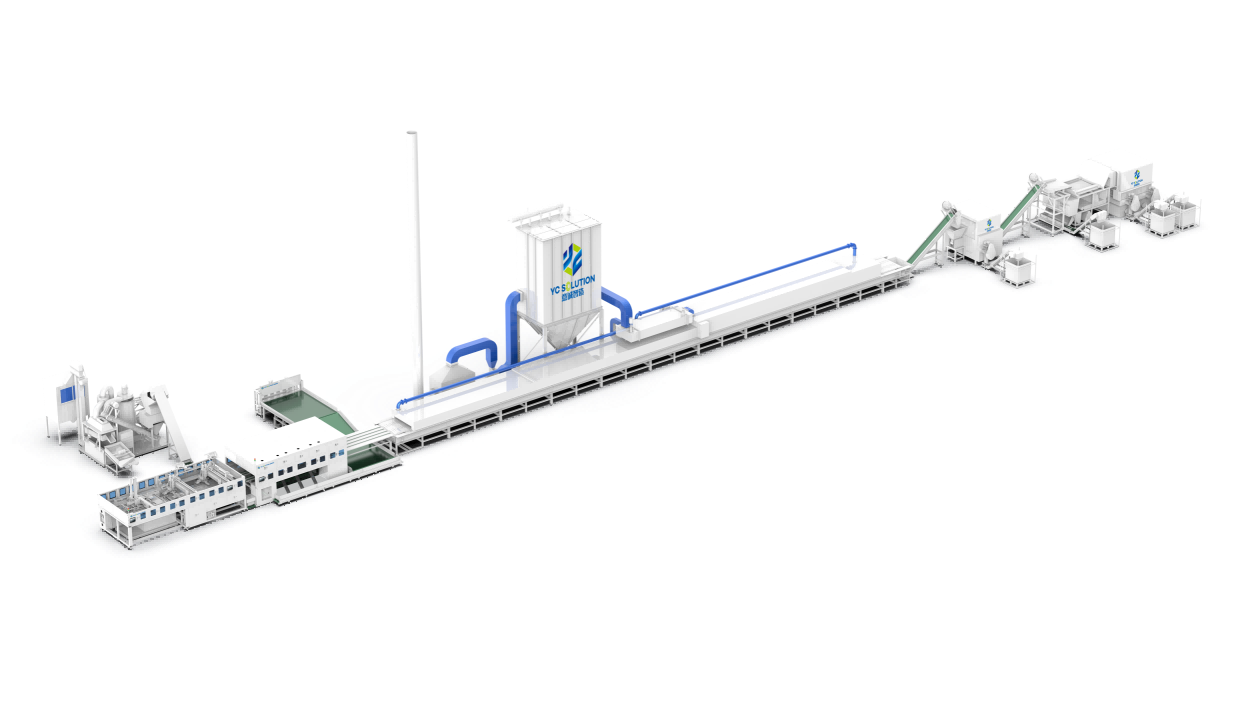
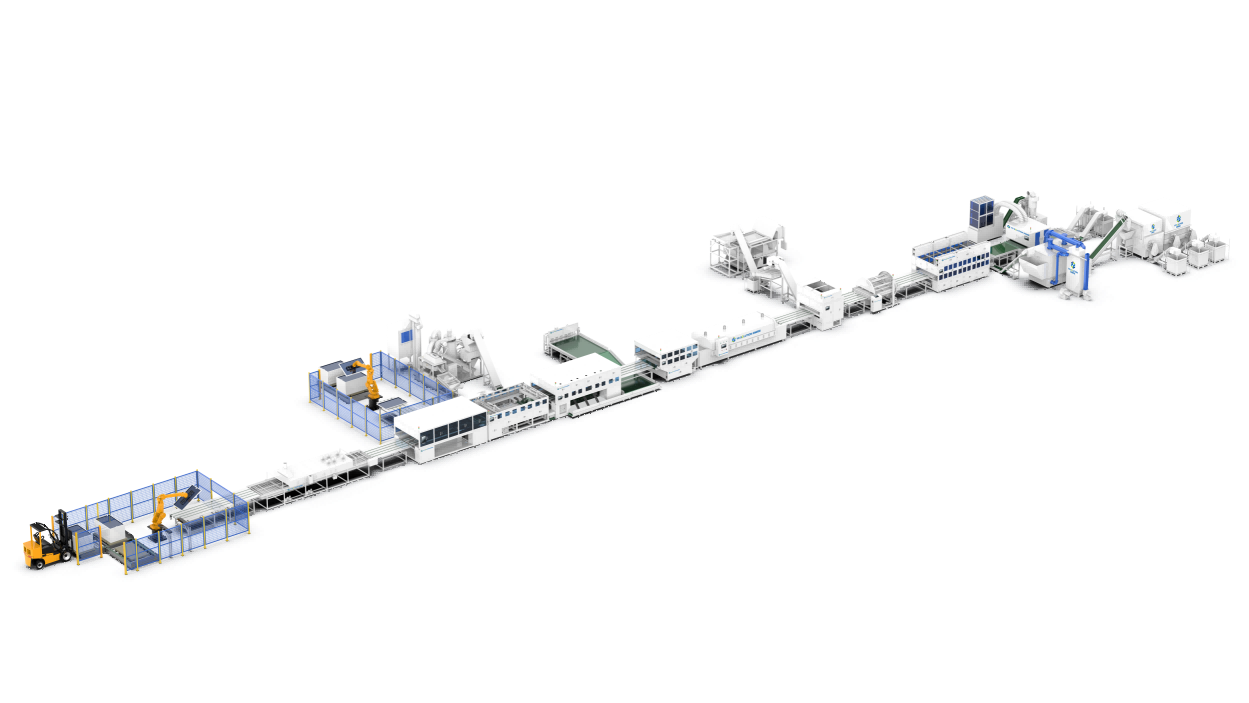
Complete line layout
Review the main equipment modules along the complete line, from front-end handling to downstream separation.
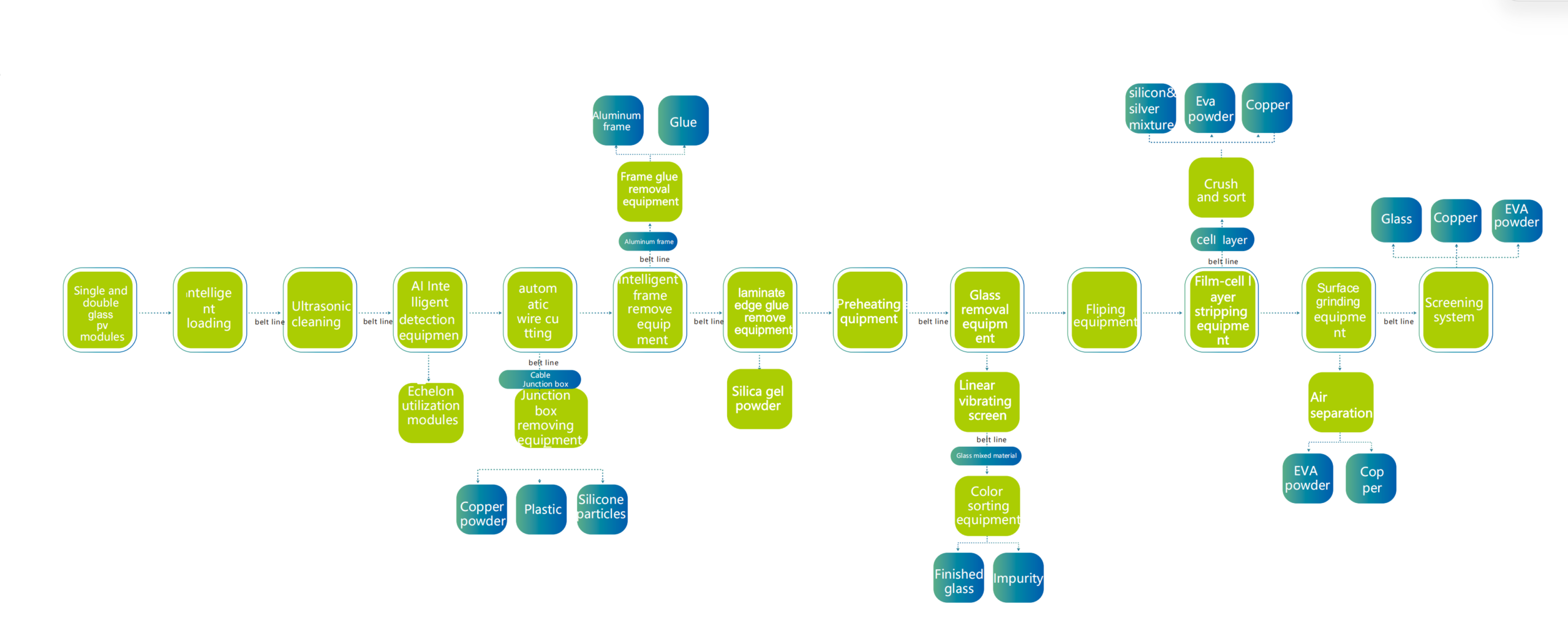
Process flow
The flow below focuses on feasibility review, controlled thermal treatment, exhaust planning, and downstream physical sorting.
Module type, project location, and local environmental requirements are reviewed before selecting pure pyrolysis.
Incoming modules may require feeding preparation, sorting, or size adjustment depending on configuration.
Thermal treatment is configured according to the material condition and process objective.
Exhaust handling and emissions control are planned as part of the route, not as an afterthought.
Material is cooled and discharged for downstream physical handling.
Downstream equipment adjusts particle size and prepares material for separation.
Screening, air separation, or other physical modules are selected according to the final process plan.
Final configuration and quotation are prepared only after review of site and module details.
Application fit
Best for selected projects where thermal treatment is required and local environmental conditions allow a pyrolysis-based route.
Route proposal
Please leave your company name, email, and WhatsApp/phone number. Our engineer will review your module condition and recommend the suitable route configuration.


Required fields: Company Name, Email, and WhatsApp / Phone. Add module photos or capacity target in the message if available.
Project questions
Pure pyrolysis is a selected thermal route, not a universal recommendation. These answers make the engineering, environmental, and site-review requirements clear before a visitor asks for pricing.


The pure pyrolysis route is a thermal-centered PV module recycling process. It places controlled pyrolysis at the core of the route, then connects cooling, discharge, crushing, screening, and physical sorting according to the project plan.
This route should be presented carefully. It can be useful for selected material conditions, but it should not be described as the standard answer for every customer. The right recommendation depends on module type, environmental approval, exhaust-treatment requirements, safety design, and the customer's downstream material objective.
No. Pure pyrolysis is not suitable for every PV recycling project. It should only be discussed after reviewing module structure, local environmental rules, permitting feasibility, workshop layout, exhaust treatment, and the customer's operating plan.
For many overseas visitors, a physical-only route may be easier to explain from an environmental approval perspective. Pure pyrolysis becomes more relevant when the customer has a clear reason for thermal treatment and can support the necessary compliance and site infrastructure.
Physical + pyrolysis uses more mechanical pre-treatment before selected thermal processing. Pure pyrolysis makes thermal treatment the central process stage, with downstream physical handling after the material is cooled and discharged.
The distinction matters because it affects layout, environmental systems, operating safety, energy planning, and maintenance. A customer comparing the two routes should provide project location, target capacity, module samples, and local permitting context so the engineer can compare feasibility rather than simply compare equipment names.
Yes. Exhaust treatment is a core part of any pyrolysis-based route. The project should consider gas handling, odor control, emissions management, operating temperature control, safety interlocks, and local environmental documentation.
For sales communication, we should avoid treating exhaust treatment as an optional accessory. It is part of whether the route can be responsibly recommended. If a visitor asks whether pure pyrolysis is allowed in their country, the right answer is to collect details and arrange engineering review.
It can be discussed for overseas projects, but suitability depends heavily on local environmental approval and site conditions. Different countries and regions may have different requirements for thermal treatment, exhaust discharge, plant layout, and operator safety.
When an overseas customer is interested, we should ask for project country, installation location, module condition, expected capacity, and whether they already have environmental-consulting support. This helps decide whether pure pyrolysis, physical + pyrolysis, or a physical route is the better starting point.
A quotation should be prepared after confirming project location, module condition, capacity target, and exhaust-treatment requirements.
No supplier should guarantee approval before local regulatory review. We can support technical discussion and process planning.
Crystalline silicon PV modules can be evaluated, but final suitability depends on module structure, damage level, and project requirements.
Damaged modules can be reviewed. Severely broken modules may also be compared with the pure physical crushing route.
Capacity depends on furnace design, feeding method, module condition, and downstream handling. It must be calculated project by project.
Automation level can be configured, but feeding, thermal control, discharge, and sorting must be planned together.
Pure pyrolysis is usually more suitable for fixed projects because exhaust treatment and thermal safety need planned site conditions.
Power supply, workshop layout, exhaust treatment space, safety controls, and local environmental requirements should be reviewed.
Yes. Downstream crushing, screening, and physical separation can be configured after thermal treatment.
Please leave company name, email, WhatsApp/phone, module photos, project location, and expected capacity for engineering review.
새 기사 알림 받기
아래 양식을 작성해 주시면 곧 연락드리겠습니다.