YCSOLUTION PROCESS ROUTE
Pure Pyrolysis PV Module Recycling Process Route
A controlled low-oxygen thermal route that decomposes organic encapsulants, releases bonded materials and connects heat recovery with downstream physical sorting.
YCSOLUTION PROCESS ROUTE
A controlled low-oxygen thermal route that decomposes organic encapsulants, releases bonded materials and connects heat recovery with downstream physical sorting.
Core advantages
Pure pyrolysis places controlled low-oxygen thermal treatment at the center of the process. It can efficiently break the encapsulant bond, but the furnace, heat recovery, process-gas use, tail-gas treatment and local approval must be engineered as one system.
Controlled low-oxygen pyrolysis decomposes organic encapsulants and high-polymer structures, releasing materials that remain strongly bonded in mechanical-only treatment.
The thermal section is designed around stable furnace operation and precise temperature control, with final settings confirmed from feedstock and capacity data.
Depending on the selected system, pyrolysis gas can be considered for combustion and heat reuse, with optional condensation and oil-recovery engineering.
Emission treatment, cooling, discharge, screening and physical sorting are included in the complete feasibility and compliance review.
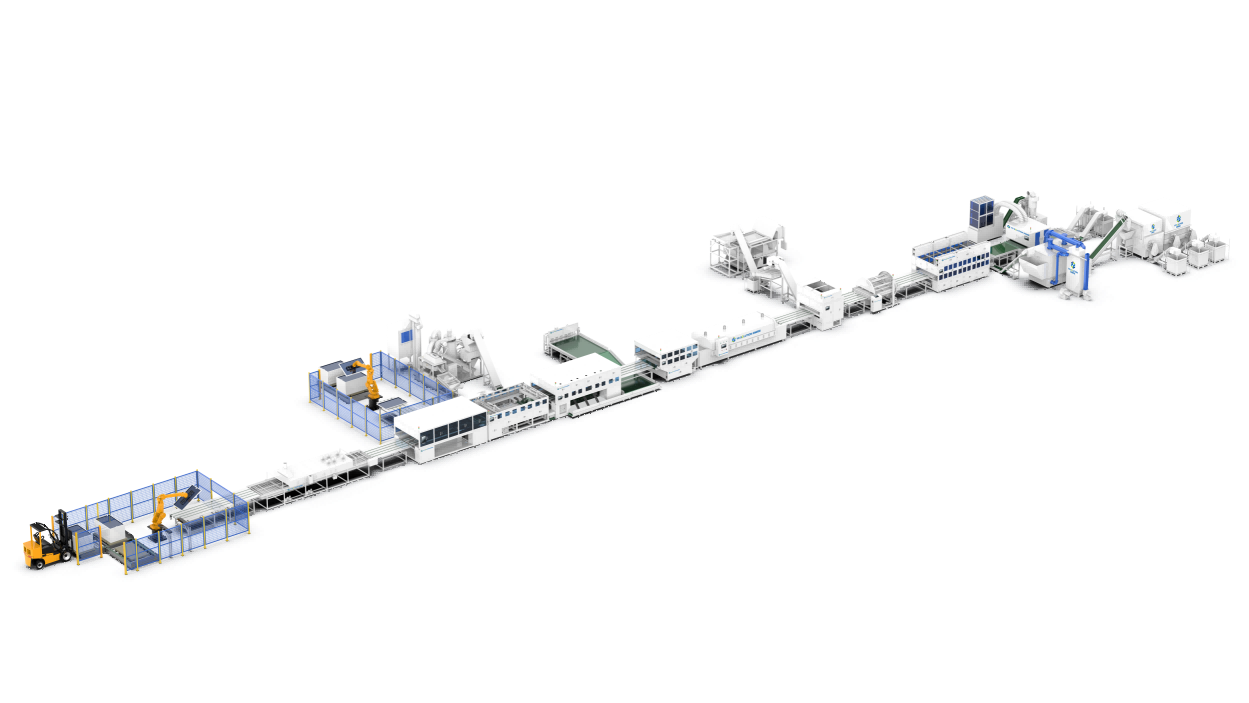
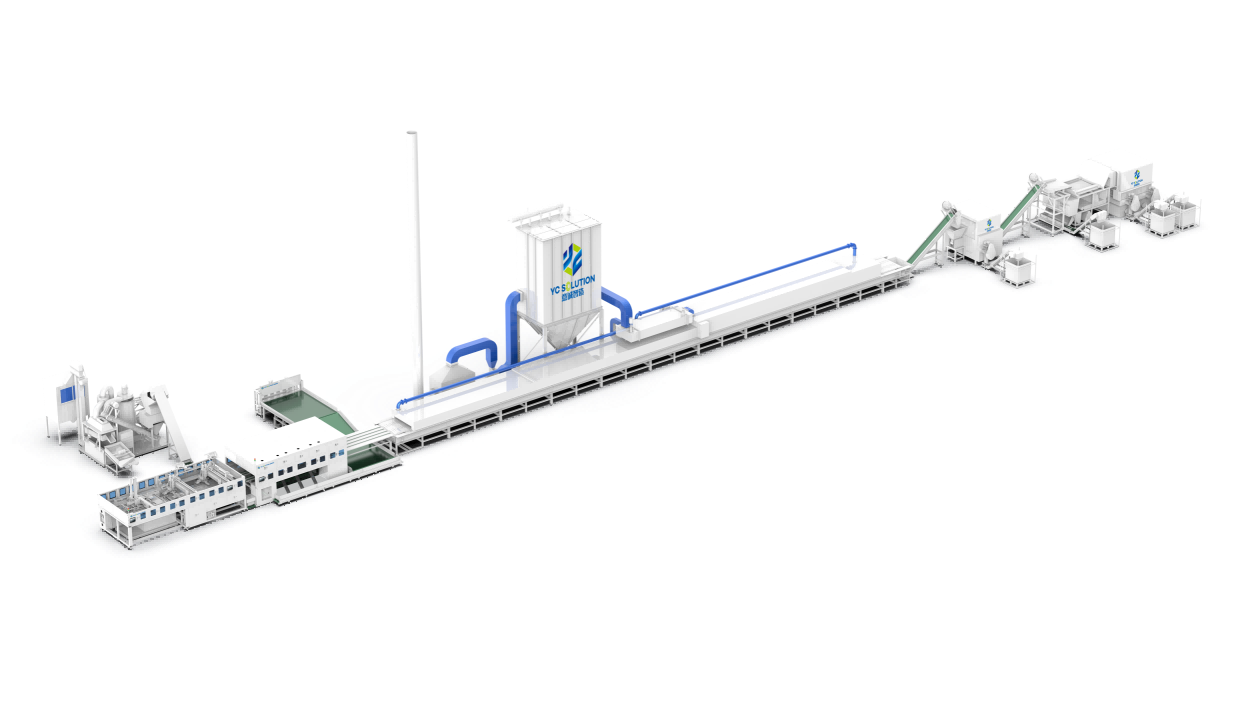
Complete line layout
1. Junction Box Processing Equipment
2. PV Module Aluminum Frame Removal Equipment
3. Aluminum Frame Groove Cleaning Equipment
4. Low-Energy Regenerative Tunnel Pyrolysis System
5. Multi-stage Material Sorting Equipment
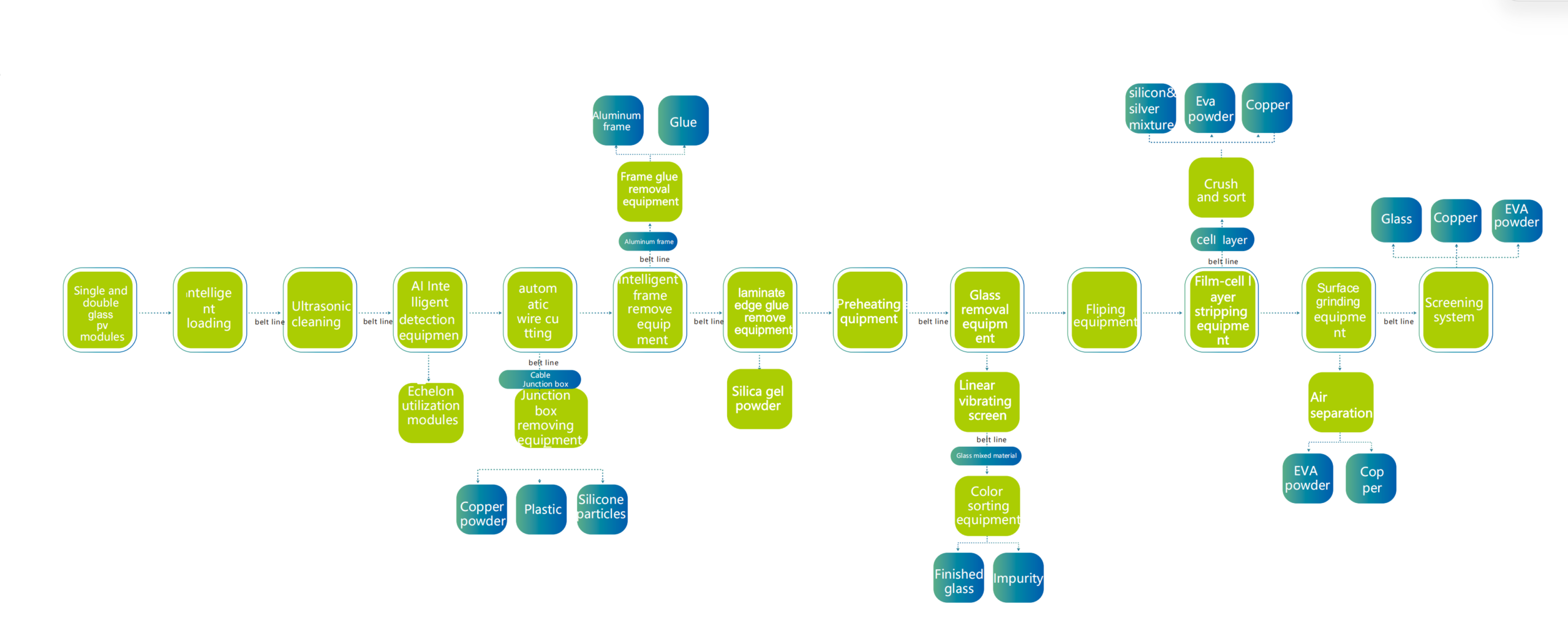
Process flow
The flow below focuses on feasibility review, controlled thermal treatment, exhaust planning, and downstream physical sorting.
Module type, project location, and local environmental requirements are reviewed before selecting pure pyrolysis.
Junction boxes and connected materials are handled in the front-end processing section before the thermal route.
The aluminum frame removal equipment separates the PV module frame from the module body before thermal treatment.
Recovered aluminum frame grooves are cleaned to separate aluminum from retained sealant and other residues.
The low-energy regenerative tunnel system applies controlled thermal treatment according to feedstock and project objectives.
Exhaust handling, process-gas management, and emissions control are engineered as part of the thermal system.
Material is cooled and discharged for downstream physical handling.
Downstream staged sorting is configured to separate the thermally treated material into the required output fractions.
Application fit
Route proposal
Please leave your company name, email, and WhatsApp/phone number. Our engineer will review your module condition and recommend the suitable route configuration.


Project questions
Pure pyrolysis is a selected thermal route, not a universal recommendation. These answers make the engineering, environmental, and site-review requirements clear before a visitor asks for pricing.


The pure pyrolysis route is a thermal-centered PV module recycling process. It places controlled pyrolysis at the core of the route, then connects cooling, discharge, crushing, screening, and physical sorting according to the project plan.
This route should be presented carefully. It can be useful for selected material conditions, but it should not be described as the standard answer for every customer. The right recommendation depends on module type, environmental approval, exhaust-treatment requirements, safety design, and the customer’s downstream material objective.
No. Pure pyrolysis is not suitable for every PV recycling project. It should only be discussed after reviewing module structure, local environmental rules, permitting feasibility, workshop layout, exhaust treatment, and the customer’s operating plan.
For many overseas visitors, a physical-only route may be easier to explain from an environmental approval perspective. Pure pyrolysis becomes more relevant when the customer has a clear reason for thermal treatment and can support the necessary compliance and site infrastructure.
Physical + pyrolysis uses more mechanical pre-treatment before selected thermal processing. Pure pyrolysis makes thermal treatment the central process stage, with downstream physical handling after the material is cooled and discharged.
The distinction matters because it affects layout, environmental systems, operating safety, energy planning, and maintenance. A customer comparing the two routes should provide project location, target capacity, module samples, and local permitting context so the engineer can compare feasibility rather than simply compare equipment names.
Yes. Exhaust treatment is a core part of any pyrolysis-based route. The project should consider gas handling, odor control, emissions management, operating temperature control, safety interlocks, and local environmental documentation.
For sales communication, we should avoid treating exhaust treatment as an optional accessory. It is part of whether the route can be responsibly recommended. If a visitor asks whether pure pyrolysis is allowed in their country, the right answer is to collect details and arrange engineering review.
It can be discussed for overseas projects, but suitability depends heavily on local environmental approval and site conditions. Different countries and regions may have different requirements for thermal treatment, exhaust discharge, plant layout, and operator safety.
When an overseas customer is interested, we should ask for project country, installation location, module condition, expected capacity, and whether they already have environmental-consulting support. This helps decide whether pure pyrolysis, physical + pyrolysis, or a physical route is the better starting point.
A quotation should be prepared after confirming project location, module condition, capacity target, and exhaust-treatment requirements.
No supplier should guarantee approval before local regulatory review. We can support technical discussion and process planning.
Crystalline silicon PV modules can be evaluated, but final suitability depends on module structure, damage level, and project requirements.
Damaged modules can be reviewed. Severely broken modules may also be compared with the pure physical crushing route.
Capacity depends on furnace design, feeding method, module condition, and downstream handling. It must be calculated project by project.
Automation level can be configured, but feeding, thermal control, discharge, and sorting must be planned together.
Pure pyrolysis is usually more suitable for fixed projects because exhaust treatment and thermal safety need planned site conditions.
Power supply, workshop layout, exhaust treatment space, safety controls, and local environmental requirements should be reviewed.
Yes. Downstream crushing, screening, and physical separation can be configured after thermal treatment.
Please leave company name, email, WhatsApp/phone, module photos, project location, and expected capacity for engineering review.
This page answers the buyer intent behind pure pyrolysis pv module recycling process route, solar panel recycling process, PV module recycling equipment, end-of-life PV recycling, physical recycling process, thermal recycling route, PV material recovery, recycling process route, crystalline-silicon module recycling, recovery rate verification. These phrases are used as engineering concepts—not as a repetitive keyword list—so the page remains useful to Google, AI answer engines and project teams.
Continue the decision path with physical solar panel recycling そして solar panel recycling with pyrolysis. Both pages expand the same project question from a different technical or commercial angle.
Related engineering decision: teams evaluating pure pyrolysis pv module recycling process route should also compare pv module pyrolysis そして solar panel recycling process for single-glass and double-glass modules. These internal references connect feedstock, process route, equipment scope and acceptance criteria instead of sending readers only to a product catalogue.


Related engineering decision: teams evaluating pure pyrolysis pv module recycling process route should also compare solar panel waste management そして double-glass solar panel recycling. These internal references connect feedstock, process route, equipment scope and acceptance criteria instead of sending readers only to a product catalogue.
Share the material type, condition, annual volume, target output, destination country and site constraints. YCSOLUTION will map the suitable equipment route, interfaces and acceptance criteria.
Explore the complete solution · Discuss the project with Jessie Liu
新着記事の通知を受け取る
下記のフォームにご記入ください。